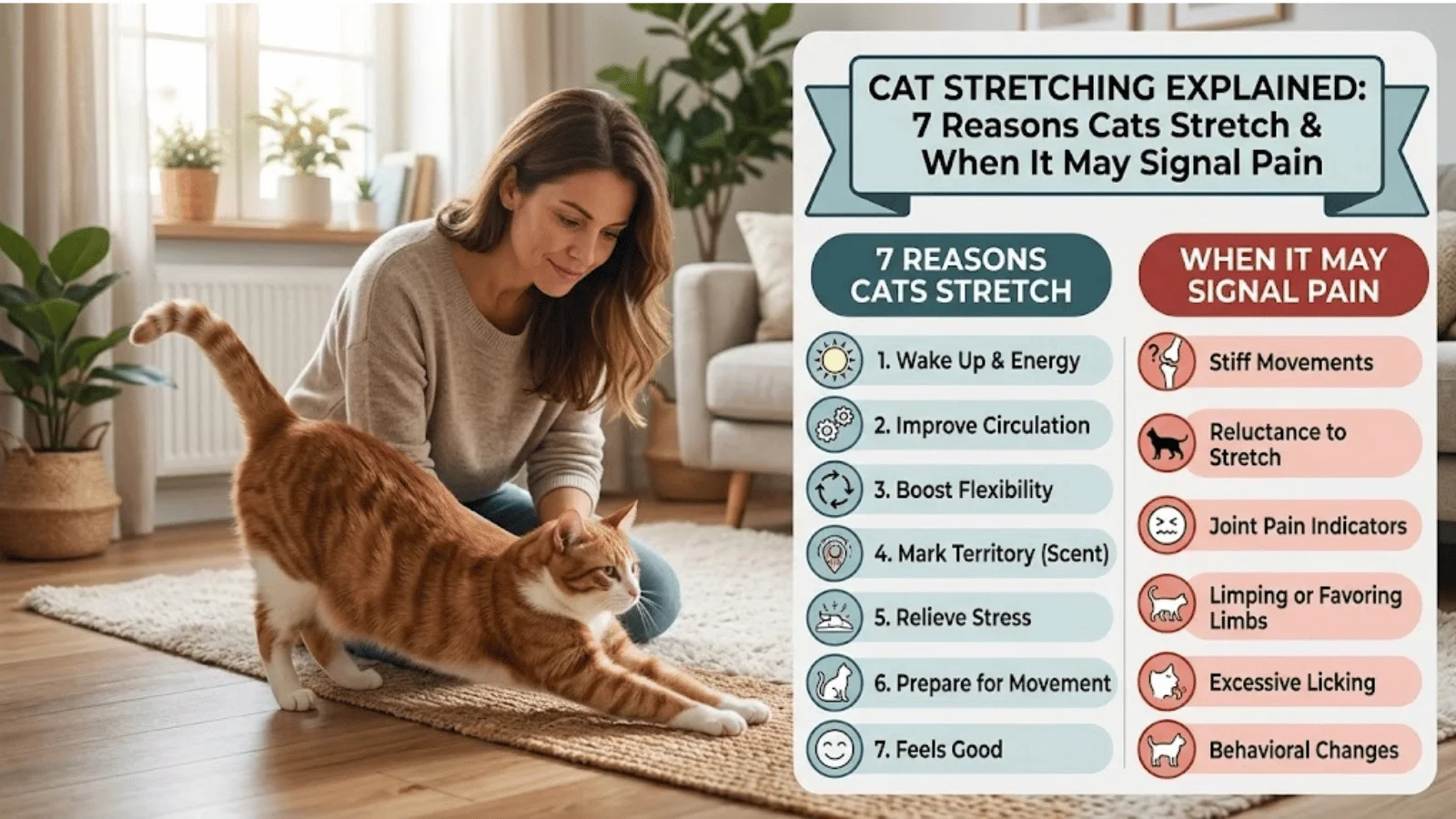
Cat stretching is usually a normal part of waking, moving, playing, and communicating. Your cat may stretch after sleep or before a burst of activity. The surrounding body language helps explain what the movement means.
Direct answer: Cats stretch to loosen their bodies after rest, prepare for movement, and maintain comfortable mobility. A relaxed stretch can also accompany greetings, play, or a change in activity. Sudden stiffness, reduced jumping, limping, altered grooming, or pain during movement deserves veterinary attention.
| What you notice | Common meaning | What to watch next |
|---|---|---|
| Long stretch after sleep | Transition from rest to movement | Normal walking and jumping |
| Stretch when you enter | Relaxed greeting or readiness to interact | Loose posture and friendly approach |
| Front paws forward | Shoulder and spine extension | Comfortable, even movement |
| Stretch before play | Preparation for activity | Normal energy and coordination |
| Short, hesitant movement | Possible stiffness or discomfort | Reduced jumping, grooming, or play |
Key Takeaways
- Most feline stretches are routine and happen around rest or activity.
- Context matters more than one isolated pose.
- A greeting stretch often appears with relaxed, social body language.
- Changed mobility can matter more than frequent stretching alone.
- Senior cats deserve closer observation for stiffness and joint pain.
What Cat Stretching Usually Means
Cats spend much of each day alternating between rest and short periods of activity. A full extension helps them shift from stillness into movement. Veterinary sources describe this behavior as a normal way to maintain mobility and readiness.
The movement can involve the shoulders, spine, hips, legs, and paws together. That coordinated motion explains why the familiar pose looks so complete. Northwoods Veterinary Clinic describes full-body stretching as a normal transition after rest.
Seven Common Reasons Cats Stretch
One stretch can serve several purposes, so timing gives the best clue. Watch what happened immediately before the movement. Then notice what your pet does during the next minute.
- Waking after sleep. Rest leaves the body still for long periods, so a stretch often starts the next activity.
- Preparing to move. Many cats extend before walking, climbing, jumping, chasing, or playing.
- Maintaining comfortable motion. Regular natural movement keeps joints and muscles working through familiar ranges.
- Greeting a familiar person. Some cats stretch soon after noticing someone they trust.
- Inviting interaction. A stretch may precede rubbing, chirping, play, or a request for attention.
- Combining stretching with scratching. Paw glands can leave scent during scratching and related marking behavior.
- Resetting after one position. Cats may extend after sitting, loafing, or resting in the same posture.
Don’t read these meanings from the pose alone. A loose body supports a relaxed interpretation. A tense body, hiding, or changed movement needs a different reading.
Why Your Cat May Stretch When They See You
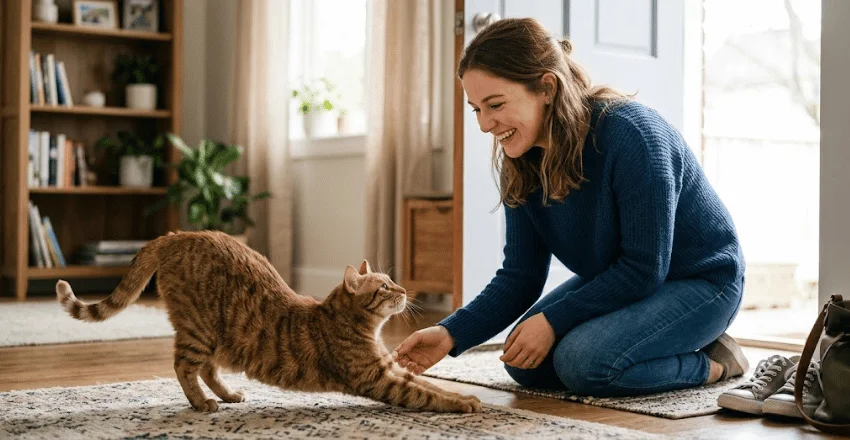
A stretch after your arrival can be both physical and social. Your cat may have been resting moments before you entered. The movement can also begin a familiar greeting routine.
Catster’s veterinarian-reviewed guide lists communication, play readiness, security, and territorial behavior among possible explanations. PetMD also advises reading feline posture as a collection of signals. Ears, tail position, eyes, and movement all add useful context.
A relaxed greeting may continue with rubbing, slow blinking, chirping, or walking toward you. Those extra signals strengthen the social interpretation. The stretch by itself does not prove affection or trust.
Common Stretching Positions and What They Suggest
Different poses emphasize different parts of the body, but meanings still overlap. Think of each posture as one clue, not a diagnosis. Your cat’s normal pattern is the best point of comparison.
| Stretching position | Likely context | Usually reassuring signs |
|---|---|---|
| Front legs extended, rear raised | Waking or preparing to move | Loose back, smooth walking afterward |
| Long side stretch | Relaxation after rest | Soft eyes, calm breathing, easy movement |
| Back arch during extension | Full-body movement or play preparation | No hissing, limping, or defensive tension |
| Paw stretch near a scratcher | Stretching plus scratching behavior | Normal scratching and relaxed posture |
| Brief or uneven extension | Possible stiffness | Watch for repeated hesitation or guarding |
Breed and body size can change how these movements look. Large cats may appear more dramatic during a full extension. Magazism’s Maine Coon guide offers more background on a notably large domestic breed.
When Frequent Stretching May Need Attention
Frequent movement is not automatically a health problem. The stronger warning sign is a change from your cat’s usual mobility. New stiffness, limping, or hesitation around jumps deserves closer attention.
VCA Animal Hospitals lists difficulty rising, stiff walking, reduced jumping, and poor grooming as signs of osteoarthritis. VCA also reports osteoarthritis affects about 90% of cats over age ten. Older cats can hide discomfort, so subtle behavior changes matter.
AAHA notes that cats often hide pain rather than crying or limping clearly. Changes in activity, grooming, posture, or social behavior can provide better clues. Record a short home video when movement looks unusual.
Signs that justify a veterinary appointment
- New limping, stiffness, or an uneven gait
- Reduced jumping onto furniture or favorite perches
- Difficulty entering a high-sided litter box
- Less play or reluctance to climb stairs
- Poor grooming or a suddenly unkempt coat
- Repeated discomfort when touched or picked up
- Sudden inability to use the back legs, which needs urgent care
Do not use human pain medicine unless a veterinarian specifically prescribes it. Many common products can be dangerous for cats. A veterinary examination can identify whether joints, muscles, nerves, or another condition explains the change.
How to Support Comfortable Natural Movement
You do not need to manually pull a healthy cat into a stretch. Instead, create safe reasons for natural movement throughout the day. Short play sessions and well-placed scratchers can encourage comfortable activity.
Offer stable surfaces, easy climbing routes, and resting places at different heights. Senior cats may benefit from steps or ramps near favorite furniture. Nonslip rugs can also improve confidence on smooth floors.
A tall scratching post should let your cat extend without the base wobbling. Place one near a favorite sleeping area, since stretching often follows rest. The Magazism Pets section has more general reading for everyday companion-animal care.
For readers interested in feline posture and appearance, Magazism also covers the Gigachad cat meme. That lighter feature focuses on how strong-looking poses shape online cat culture. It can complement this behavior-focused explanation without replacing health guidance.
How to Read the Whole Body, Not Just the Stretch
Start with the ears, eyes, tail, and muscle tension. Relaxed ears and soft eyes usually fit a calm situation. Flattened ears, a tucked posture, or tense movement suggest discomfort or fear.
Next, watch what happens after the extension ends. Normal walking, grooming, eating, and jumping are reassuring signs. Repeated repositioning or difficulty settling can point toward discomfort.
Keep your interpretation personal to the animal you know. A behavior that is ordinary for one pet may be new for another. Consistency over several days can reveal more than one dramatic moment.
Frequently Asked Questions
Is cat stretching normal after sleep?
Yes, it is usually normal after a nap or long rest. The movement helps your pet transition into activity. Concern rises when the usual stretch becomes hesitant, painful, or noticeably different.
Why does my cat stretch when they see me?
Your arrival may happen while your pet is waking from rest. The movement can also be part of a relaxed greeting. Look for rubbing, chirping, soft eyes, or a friendly approach afterward.
Why does my cat stretch and yawn together?
Both behaviors commonly appear during the shift from sleep to wakefulness. The combination often happens before walking, eating, grooming, or playing. Normal activity afterward makes a routine explanation more likely.
What does a front-leg stretch mean?
Extending the front legs lengthens the shoulders, chest, and upper body. It often appears after rest or before activity. Check whether both sides move smoothly and comfortably.
Should I stretch my cat’s legs for them?
Healthy cats usually manage their own natural movement without help. Do not force limbs beyond a comfortable position. Ask your veterinarian before trying assisted exercises if you suspect injury or arthritis.
When should I call a veterinarian?
Call when stretching changes, along with stiffness, limping, reduced jumping, or altered grooming. Appetite or litter-box changes also deserve attention. Seek urgent care for sudden severe weakness or inability to use the back legs.
Watch the Pattern, Not One Pose
Most feline stretches are ordinary parts of rest, movement, play, and social behavior. The most useful clue is whether your cat moves normally afterward. Familiar patterns make small changes easier to spot early.
Give your pet room to move, scratch, climb, and rest comfortably. Keep a short video if you notice a new change in mobility. Share that record with your veterinarian when stiffness, pain, or reduced activity persists.