
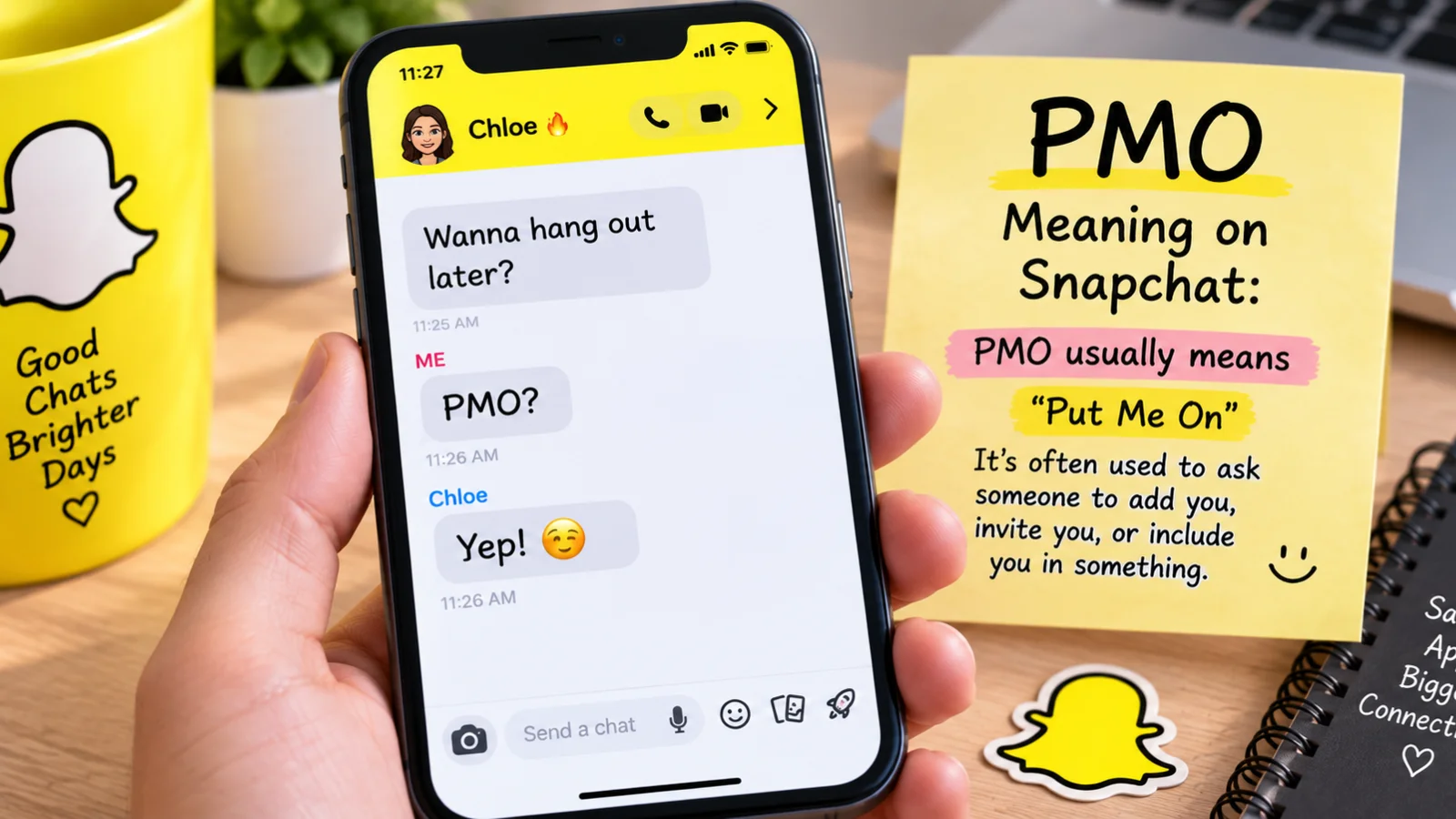
If you searched for pmo meaning text Snapchat, you’re probably trying to decode a short message that could mean two completely different things. In casual U.S. texting and social media conversations, the abbreviation can mean “put me on” or “pisses me off.” The words around it, the tone, and what the sender is talking about usually tell you which definition fits.
| Quick fact | Meaning |
|---|---|
| Term | PMO |
| Common meaning 1 | Put me on. |
| Common meaning 2 | Pisses me off / pissing me off |
| Where it appears | Snapchat, texts, TikTok, Instagram, group chats |
| Best clue | Look for a request versus a complaint. |
| Formal use? | No, both slang meanings are highly informal. |
Quick answer: In Snapchat messages and regular texts, the acronym usually means either “put me on,” meaning recommend or introduce me to something, or “pisses me off,” meaning something is annoying or frustrating. A request usually signals the first meaning, while a complaint or angry reaction usually signals the second.
PMO Meaning Text Snapchat: The Two Main Definitions
The friendly definition means “put me on.” If someone writes “PMO to some new music,” they’re asking you to recommend an artist, song, playlist, or something else worth checking out. Wiktionary records the internet-slang form as an initialism of “put me on,” meaning to draw someone’s attention to something useful or interesting.
The second definition expresses irritation and can mean “pisses me off,” “piss me off,” or “pissing me off.” A message about traffic, school, work, another person, or an annoying situation is more likely to carry this frustrated meaning. Current slang explainers consistently show both definitions, which is why reading the entire message matters more than memorizing one expansion.
These meanings can seem confusing because their emotional purposes are almost opposites. One asks another person to share a recommendation or connection, while the other communicates annoyance. A useful shortcut is to decide whether the sender is asking for something or reacting negatively.
How to Tell Which Meaning Someone Intended
Sentence structure gives you the fastest clue when the abbreviation appears in a chat. Messages containing “to,” a product, a song, a restaurant, a person, or another recommendation topic generally point toward “put me on.” Messages built around a complaint, bad experience, or irritated reaction usually point toward the profanity-based definition.
| Message example | Likely meaning | Why |
|---|---|---|
| “pmo to some good workout songs.” | Put me on. | The sender wants recommendations. |
| “that homework pmo every week.” | Pisses me off | The sender is complaining. |
| “your shoes are fire, PMO.” | Put me on. | The sender wants the source or brand. |
| “People who drive like that, PMO” | Piss me off. | The sentence expresses irritation. |
Tone is another useful clue, especially when a message is short. Curious emojis, questions, compliments, and requests for recommendations tend to support the friendly definition, while angry emojis and complaints support the frustrated one. If the message contains nothing except the abbreviation, asking what the sender means is safer than guessing.
What Does PMO Mean on Snapchat?
Snapchat doesn’t give the abbreviation a special platform-only definition. Friends use the same slang meanings found in texts, TikTok comments, Instagram messages, and group chats, although recommendation requests can feel especially natural in one-to-one Snap conversations. Snapchat’s own Spotlight topic pages also contain creator content using the term in its “put me on” sense.
Imagine that a friend posts a Snap from a restaurant and you want the location. A short response asking them to put you on the spot would clearly be a recommendation request rather than an angry message. If that same friend posts about a canceled event and complains about the organizer, the frustrated definition makes much more sense.
Because Snapchat conversations are often brief, earlier messages can matter as much as the current one. Read the last few lines before deciding what the abbreviation means, particularly if someone sends it by itself. That small context check prevents an awkward reply based on the wrong interpretation.
Readers interested in online culture and technology topics can also browse Magazism’s Tech coverage. The section covers technology and digital topics that shape the way people communicate online. It also provides a natural starting point for related internet and platform explainers.
How the Slang Is Used Across Texts and Social Media
Regular texting follows the same basic context rules as Snapchat. Recommendation language points to “put me on,” while complaint language points to the irritated meaning. That pattern also appears across TikTok, Instagram, X, Discord, and other informal online conversations.
Common situations include:
- Asking someone to recommend music, movies, restaurants, games, or clothes.
- Asking for an introduction to a person or useful contact.
- Reacting to an irritating event, habit, delay, or problem.
- Adding a short emotional reaction to a caption or group-chat message.
TikTok helped spread both interpretations to a wider audience, which is one reason the abbreviation now causes confusion across platforms. Internet-culture records show the “put me on” use becoming highly visible on TikTok during the early 2020s, while the frustration-based use later gained renewed viral attention.
For more pop-culture topics beyond social slang, Magazism’s Entertainment section covers personalities, media, and trending subjects. That category helps readers move from a slang explainer to broader cultural coverage. It also reflects how online expressions often spread through entertainment communities.
Where Did the Slang Come From?
The two definitions did not become popular online at exactly the same time. Know Your Meme traces an early Urban Dictionary entry for the frustration meaning to 2005 and a “put me on” definition to 2016, with the latter gaining wider visibility on TikTok years afterward. These dates document online definitions rather than proving the first time anyone ever used either expression.
The phrase “put me on” also has roots in Black American speech and internet culture, where it can mean introducing someone to information, music, people, or opportunities. Slang.net connects that usage with African American Vernacular English before its broader adoption in social media conversations. As with many internet expressions, widespread use can make the phrase look newer than the language behind it.
Magazism already publishes explainers that unpack phrases and cultural trends, including its article on the meaning of “Tung Tung Tung Sahur.” That article shows how online phrases can carry cultural context beyond their literal words. Slang deserves the same care because a three-letter abbreviation can have a history that a quick definition misses.
How Should You Reply When Someone Uses It?
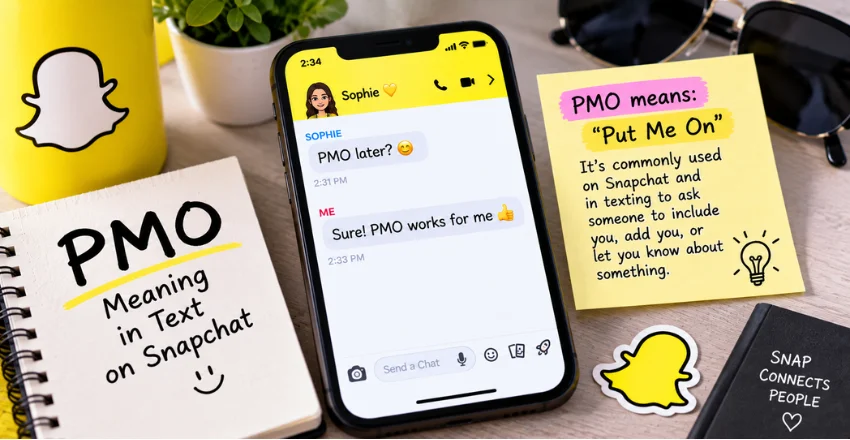
Your reply should match the interpretation suggested by the conversation. If someone is asking for a recommendation, answer by sharing the song, product, restaurant, person, or other information they want. If they’re expressing frustration, respond to the problem or feeling instead of sending a recommendation.
For example:
- “pmo to that playlist” → Send the playlist or artist name.
- “this class is pissing me off” → Respond to the complaint or ask what happened.
- “your jacket is nice, pmo.” → Tell them the brand or where you bought it.
- A standalone message → Ask, “You mean put you on to something?”
You don’t need to overthink the response if the context is clear. The main mistake is assuming every use has the same definition, because that can turn a friendly recommendation request into an awkward exchange. When the sender’s meaning remains uncertain, a short clarification works better than guessing.
Is the Abbreviation Rude?
The “put me on” definition usually isn’t rude, but it is casual slang. It works naturally among friends and in informal DMs, although the tone can sound demanding if someone sends it without any context or courtesy. You probably wouldn’t use it in a formal email, school assignment, customer message, or professional conversation.
The frustration definition is stronger because it includes profanity. Friends may use it casually when venting, but the wording can sound aggressive when it refers directly to another person. Your relationship with the sender and the situation should guide whether you repeat it yourself.
Frequently Asked Questions
What does “pmo meaning text snapchat” refer to?
The search phrase refers to the slang abbreviation people encounter in Snapchat chats and ordinary text messages. It most often points to either “put me on,” which asks for a recommendation or introduction, or a phrase meaning something is irritating the speaker. The surrounding sentence is the most reliable way to tell the difference.
Does PMO always mean “put me on” on Snapchat?
No, the platform does not limit the abbreviation to one meaning. A recommendation request can use the friendly definition, while an annoyed caption or chat can use the frustration-based definition. Read the tone and subject of the message before deciding what the sender intended.
Is PMO the same on TikTok and Instagram?
The same two slang definitions appear across major social platforms. TikTok and Instagram users may ask to be introduced to a song, product, creator, or trend or use the abbreviation when complaining. The platform provides context, but the sentence itself remains the stronger clue.
What should I do if I cannot tell what the sender means?
Ask a short follow-up rather than responding based on a guess. Something as simple as “you mean put me on?” gives the other person an easy chance to clarify. This is especially useful when the message contains only three letters and no other clues.