
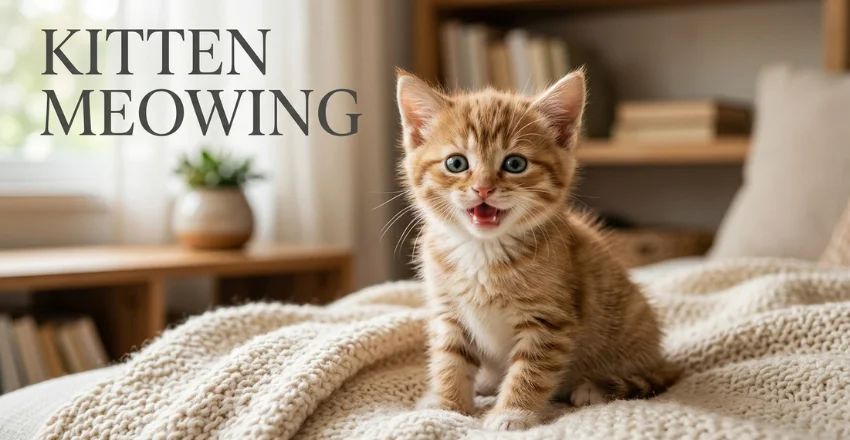
A kitten meowing again and again can be adorable for the first few minutes, but it can quickly leave a new pet owner wondering whether something is wrong. Kittens use vocalization to communicate needs ranging from hunger and attention to fear, discomfort, and illness, and younger cats may be considerably more vocal than adults. The key is not simply counting the meows but noticing when they happen, what your kitten is doing at the time, and whether anything else about their behavior has changed.
Direct answer
Kitten meowing is usually a young cat’s way of asking for food, attention, play, comfort, help finding the litter box, or reassurance in a new home. Constant or suddenly different meowing can also signal pain or illness, especially when paired with poor appetite, lethargy, vomiting, diarrhea, breathing trouble, or litter-box straining.
Why Is My Kitten Meowing So Much?
There is rarely one universal meaning behind these cries because the same sound can mean different things. One kitten may call whenever a person leaves the room, while another becomes vocal around mealtimes, during play, or immediately after entering the litter box. Kittens also have individual personalities, so what seems unusually talkative compared with another cat may simply be normal communication for that particular kitten.
| What is happening? | Possible reason | What to check first |
|---|---|---|
| Meowing near the food bowl | Hunger or feeding routine | Meal timing and appropriate kitten food |
| Calling when you leave | Loneliness or insecurity | Comfort, companionship, safe space |
| Meowing while following you | Attention or play | Interaction and enrichment |
| Crying in the litter box | Constipation, urinary discomfort, or litter issue | Stool, urine, straining, box cleanliness |
| Meowing after moving homes | Stress or confusion | Quiet home base and familiar items |
| Sudden loud or unusual crying | Pain or illness | Other physical or behavioral symptoms |
| Evening or early-morning meowing | Activity, hunger, or attention | Play routine and basic needs |
1. Your Kitten May Be Hungry

Growing kittens have substantial nutritional needs, and young kittens generally need food more frequently than adult cats. A kitten that becomes especially vocal before meals, follows you into the kitchen, or settles shortly after eating may simply be communicating hunger. Feed a complete and balanced food formulated for growth, follow the food’s feeding guidance, and ask your veterinarian to adjust portions if your kitten seems constantly hungry or is not growing as expected.
For U.S. owners, choosing a kitten food with an appropriate nutritional adequacy statement is more useful than choosing food based only on marketing terms or ingredient trends. Avoid responding to every meow with treats because that can make it difficult to distinguish genuine hunger from learned food-seeking behavior. If your kitten repeatedly cries for food but eats very little, loses weight, vomits, or develops diarrhea, contact your veterinarian rather than simply increasing portions.
2. A New Kitten May Feel Lonely or Unsafe
Moving into a new house is a major change for a kitten that recently lived with its mother, littermates, foster family, or shelter companions. New smells, unfamiliar rooms, household sounds, and the sudden absence of other cats can trigger calling, especially during the first few nights. Veterinary behavior guidance recommends giving a new kitten a manageable, secure area rather than immediately giving it unrestricted access to an unfamiliar home.
Set up a quiet home base with food, fresh water, an accessible litter box, safe hiding options, a comfortable sleeping area, toys, and something familiar if you were given bedding from the kitten’s previous environment. During calm periods, play and sit with your kitten rather than forcing constant handling when they are nervous. As confidence grows, you can gradually introduce additional rooms and normal household experiences.
3. Your Kitten Wants Attention or Play
Sometimes the meowing means exactly what it appears to mean: your kitten wants you. Young cats have a lot of energy when awake and need chances to chase, pounce, climb, explore, and interact socially. A kitten that walks behind you meowing but then becomes absorbed in a wand toy or settles after affection may have been asking for interaction rather than food.
Build several short play opportunities into the day using kitten-safe toys rather than relying exclusively on your hands as play objects. Rotate toys to keep them interesting and provide scratching surfaces, climbing opportunities, and places from which your kitten can watch the household safely. Consistent enrichment can also make it easier to recognize unusual vocalizations because you will know what your kitten normally sounds like when their social and play needs are met.
4. Litter-Box Meowing Deserves Extra Attention
Some kittens vocalize around the litter box without being ill, particularly while they are still learning their bathroom routine. However, repeated crying, obvious straining, producing little or no stool, vomiting, appetite loss, or a swollen-looking abdomen can accompany constipation or another medical problem. Kittens are small and can deteriorate faster than healthy adult cats, so don’t dismiss persistent litter-box distress as a behavioral quirk.
Watch what your kitten actually produces instead of assuming a litter-box visit was successful. Keep the box easy to reach, clean, and appropriately sized, especially for a very young kitten that may struggle with tall sides. If your kitten repeatedly strains to urinate, produces little or no urine, or appears acutely distressed, seek veterinary care promptly.
5. Stress and Fear Can Make Kittens More Vocal
Vocalizing can increase when something in the environment suddenly changes, including moving homes, meeting another animal, encountering visitors, hearing construction, or experiencing unfamiliar household equipment. Socialization is important, but useful socialization means controlled, positive exposure rather than overwhelming a frightened kitten with everything at once. Kittens learn about people, animals, noises, handling, and new surroundings rapidly during their early development.
If the meowing begins after a specific event, reduce the intensity of that trigger and allow your kitten to approach at their own pace. Provide hiding places and avoid pulling a frightened kitten out simply to make them “get used to” something. When introducing another pet, use a gradual introduction plan instead of immediately putting both animals together and hoping they work things out.
6. Pain or Illness Can Cause Persistent Crying
A sudden change in the amount, pitch, or urgency of your kitten’s voice matters more than whether the kitten has always been talkative. Pain, digestive problems, respiratory illness, injuries, and other health conditions can all change normal behavior, and affected kittens may also eat less, hide, become lethargic, or stop playing. Veterinarian-reviewed guidance recommends investigating excessive or unusual vocalization when you’ve addressed basic needs and the kitten still appears distressed.
Very young kittens require particularly close observation because weakness, poor nursing, low body temperature, diarrhea, breathing problems, and constant distressed crying can accompany serious illness. Fading kitten syndrome, for example, is an emergency in which kittens fail to thrive before weaning and can worsen rapidly. Newborn or orphaned kittens that cry continuously despite warmth and feeding should therefore receive veterinary guidance rather than being managed as ordinary attention-seeking.
7. Why Is My Kitten Meowing at Night?
Nighttime crying commonly occurs because a newly adopted kitten feels alone, is still learning the household routine, wants activity, or has discovered that vocalizing brings a person into the room. Cats naturally tend to become more active around dawn and dusk, so evening bursts of energy are not necessarily a sign that something is wrong. Before treating nighttime calling as a training problem, make sure your kitten has eaten appropriately, can reach fresh water and a clean litter box, is comfortable, and appears healthy.
Try scheduling an interactive play period in the evening, then let your kitten wind down in a comfortable sleeping area. If the kitten is newly adopted, reassurance and a smaller secure room can be more appropriate than expecting immediate independence on the first night. Once you are certain that there is no medical issue or unmet need, avoid accidentally teaching an older kitten that prolonged nighttime yelling always produces food or exciting attention.
Kitten Age Changes What Meowing Means
The needs of an eight- or twelve-week-old adopted kitten are very different from those of a newborn. Orphaned newborn kittens require intensive care that includes warmth, frequent milk-replacer feeding, and assistance with urination and defecation during the earliest stage of life, while kittens around eight weeks are generally entering the active, playful stage most pet owners recognize. If you are caring for an unweaned kitten, do not apply ordinary behavioral advice without first making sure the kitten’s neonatal care requirements are being met.
Most pet kittens in the United States come home older and more independent, although they are still growing rapidly and learning to live in a household. VCA notes that roughly 8 to 12 weeks is an appropriate time to bring many kittens home, while veterinary care and vaccination planning begin in early kittenhood. Any newly adopted cat or kitten should also receive veterinary evaluation soon after arriving home so nutrition, parasite prevention, vaccination history, and general health can be reviewed.
If you are learning about different types of cats before or after adoption, Magazism’s Maine Coon cat guide covers temperament, grooming, diet, and general care considerations for one of America’s best-known cat breeds. Individual personality still matters more than assuming every kitten of a particular breed will vocalize in exactly the same way. Learning your own kitten’s normal routine and voice gives you the most useful baseline for spotting meaningful changes.
What to Do When Your Kitten Keeps Meowing
Start with a simple needs check instead of trying to stop the sound right away. Observe when the kitten begins vocalizing and whether food, play, proximity, litter-box use, or a particular room seems connected to the behavior. Recording a short video of unusual episodes can also give your veterinarian useful context if the behavior continues.
Check these basics first:
- Make sure fresh water is available.
- Confirm your kitten is receiving an appropriate amount of kitten food.
- Scoop the litter box and check whether urine and stool look normal.
- Offer a calm interactive play session.
- Check for limping, swelling, injury, or tenderness.
- Look for vomiting, diarrhea, coughing, sneezing, or eye and nose discharge.
- Notice whether your kitten is alert and playful or unusually weak and sleepy.
- Give a newly adopted kitten a quiet, predictable home base.
- Note whether the meowing occurs only around one event, person, pet, or location.
Avoid yelling, spraying water, hitting, or frightening a kitten for vocalizing. Punishment does not explain what behavior you want instead, and frightening a young kitten can damage the sense of safety you are trying to establish in a new home. Once you’ve ruled out medical problems and genuine needs, reward calm behavior and build predictable routines rather than turning every ordinary attention-seeking meow into an exciting event.
When Does Kitten Meowing Mean You Should Call a Vet?
Contact your veterinarian when the crying suddenly becomes much more frequent, sounds painful, or occurs with another change in health or behavior. A kitten that will not eat, becomes markedly lethargic, repeatedly vomits, has significant diarrhea, struggles to breathe, appears injured, or cries persistently despite having basic needs met should be evaluated rather than watched indefinitely. The younger the kitten, the lower the threshold should be for seeking professional advice because small kittens can become weak or dehydrated quickly.
Seek urgent veterinary help for any of the warning signs below.
- Difficulty breathing or open-mouth breathing.
- Collapse, severe weakness, or seizures.
- Repeated straining with little or no urine.
- A severe injury or obvious intense pain.
- Persistent vomiting or severe diarrhea with weakness.
- An unweaned kitten that will not nurse or take appropriate formula.
- Pale or bluish gums.
- A very young kitten that feels abnormally cold and is weak or crying continuously.
Even when your kitten appears healthy, preventive veterinary care should already be part of the plan. Veterinarians can check growth, diet, parasites, congenital problems, vaccination status, and other issues that may not be obvious at home. VCA recommends repeated wellness visits during early kittenhood as the vaccination series and preventive-care program progress.
Should You Ignore a Meowing Kitten?
Do not automatically ignore a kitten simply because you suspect the behavior is attention-seeking. First confirm that food, water, litter access, comfort, health, play, and safety needs are met, especially with a kitten that has only recently joined your household. Once you’ve addressed those needs and recognize the behavior as ordinary attention-seeking, you can avoid reinforcing nonstop vocalization by waiting for a calmer moment before offering the attention the kitten wants.
Consistency matters because kittens quickly learn which behaviors produce a response from people. That does not mean withholding affection or leaving a frightened new kitten to cry indefinitely, but it does mean separating genuine needs from learned demands as you get to know your pet. Think of the goal as understanding the communication, not simply silencing it.
Frequently Asked Questions
Why is my new kitten meowing constantly?
A newly adopted kitten may meow because they are separated from familiar cats and adjusting to unfamiliar sights, smells, people, and routines. Provide a smaller secure area, regular meals, gentle interaction, play, and a predictable daily routine while they settle in. If the meowing remains intense or occurs with poor appetite, lethargy, digestive problems, or other symptoms, arrange a veterinary examination.
Why does my kitten meow when I leave the room?
Your kitten may be calling for companionship because young kittens are social and may initially feel insecure when left alone. Build independence gradually while providing toys, comfortable resting areas, hiding places, and plenty of interaction when you are together. If persistent distress when separated continues and normal settling-in strategies don’t help, discuss it with your veterinarian.
Why does my kitten meow before using the litter box?
Some young kittens vocalize around bowel movements while learning their routine, but crying combined with straining or an inability to pass stool deserves attention. Check the litter box afterward to see whether your kitten actually urinated or defecated, rather than just entering and leaving the box. Contact a veterinarian when there is repeated straining, obvious discomfort, vomiting, appetite loss, or little to no urine or stool.
Why does my kitten meow while playing?
Meowing during play can simply be part of an excited kitten’s individual communication style. Some kittens vocalize while carrying toys, stalking objects, or attempting to get their owner’s attention, and this can be normal when they otherwise eat, drink, use the litter box, and behave normally. Pay more attention to a sudden behavioral change than to a playful vocal habit your kitten has consistently displayed.
Is it normal for kittens to meow more than adult cats?
Yes, kittens can be more vocal while they develop their communication and learn how to get their needs met. A young kitten may use the same general cry for hunger, reassurance, attention, play, fear, or discomfort, which can make the sound seem almost constant during some stages. What matters most is whether the behavior fits your kitten’s established pattern and whether their appetite, energy, breathing, bathroom habits, and general health remain normal.
How long does it take a new kitten to stop meowing at night?
There is no fixed number of nights because adjustment depends on age, temperament, previous living situation, routine, and the home environment. Many kittens become quieter as the new house becomes predictable and they learn when food, play, attention, and sleep normally happen. Investigate continued or worsening nighttime crying if your kitten also seems distressed, stops eating normally, develops litter-box problems, or shows other health changes.
Learn What Your Kitten Is Trying to Tell You
Most kitten meowing is communication, not misbehavior, so your first task is to identify the need behind the sound. Hunger, loneliness, playfulness, environmental stress, and a new-home adjustment are common explanations, but unusual crying can also be an early sign that a kitten is uncomfortable or sick. Paying attention to patterns and contacting a veterinarian when the meowing is sudden, persistent, or accompanied by physical symptoms gives you a safer approach than either panicking at every sound or ignoring every cry.
As your kitten settles in, you will gradually learn the difference between the “feed me,” “play with me,” and “where did you go?” versions of their voice. Keep routines predictable, provide age-appropriate nutrition and enrichment, and maintain regular veterinary care so behavioral and medical needs do not get confused. For more animal ownership and care content, continue through Magazism’s Pets section.