A widow in Baton Rouge keeps living in the family home after her husband dies. Her two adult children now hold the title on paper, and yet neither of them can sell the house without her, because she still owns something real. She cannot sell it without them either. Both sides are usually surprised.
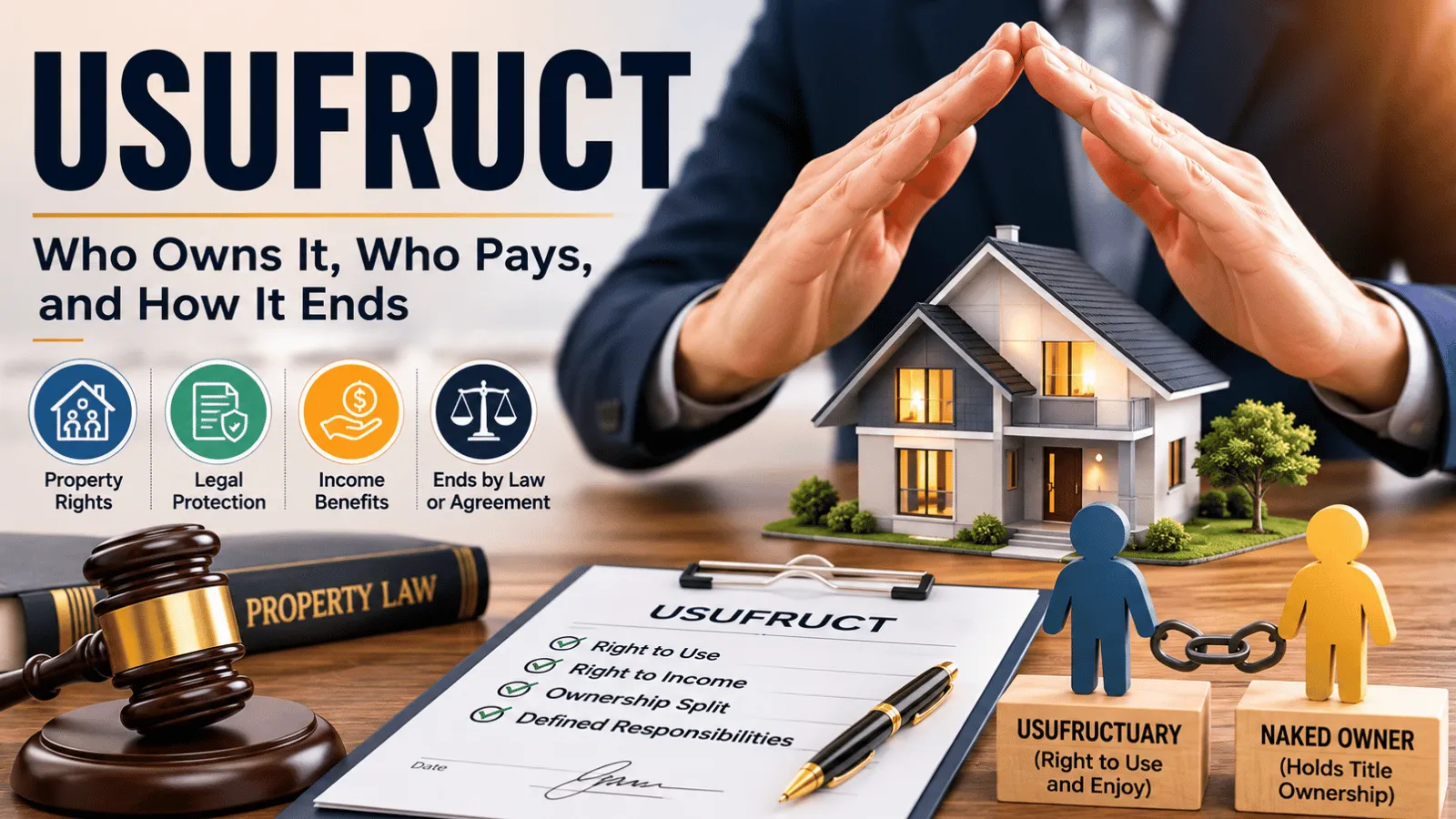
A usufruct is a legal right to use property that belongs to someone else and to keep the income it produces, normally for the rest of your life. The person holding it is the usufructuary. The person holding bare title is the naked owner, and that owner waits to receive the property whole.
Three ways to let someone stay in the house
Families across the country want the same outcome. One person stays in the home for life, and the property lands with the kids afterward. Three legal tools get you there. They behave very differently once someone is living under them, and the differences show up in the bills and in who signs closing. Cost stops many families right here. The civil law version often costs nothing, because it appears by operation of law. A trust costs real money and buys real control, so it is worth reading about whether you need both a will and a living trust before you pick.
| Practical question | Civil law use right | Life estate | Living trust |
| Where you meet it | Louisiana, Puerto Rico, most of Europe and Latin America | All 49 common law states | Every state |
| Who holds the title? | The naked owner | The remainderman, subject to the life tenant | The trustee, for the beneficiaries |
| Who may sell the property outright? | Nobody alone; both roles must sign. | Nobody alone; both roles must sign. | The trustee, under the trust terms |
| Who pays the routine bills? | The holder | The life tenant | The trust, from its own funds |
| How it usually starts | By law at death, or by act of donation | By deed or by will | By a signed trust document |
| Flexibility once running | Low: the code sets the rules. | Low: the deed sets the rules. | High, the trustee has discretion. |
| Typical setup cost | $0 when it arises automatically | Roughly $300 to $1,500 for a deed | Roughly $1,500 to $4,000 |
Key takeaways
- The right splits property into two roles: one person uses it, another owns it.
- The holder gets use and income. The power to sell or destroy stays with the naked owner.
- Louisiana is the one state built on the civil code, so the term shows up in almost every succession there.
- Routine bills, property taxes, and ordinary repairs fall on the holder. Major structural work falls on the naked owner.
- Common law states reach a similar result with a life estate, and many families use a trust instead.
The two roles, with real numbers attached

Picture Marie, age 68, and a house in Lafayette worth $320,000. Her late husband owned half of it as community property. She keeps the right to live there. Her son and daughter split the bare title, so on paper the house belongs to two people who may never spend a night in it. Marie can stay put.
She can also move out and rent the place for $1,650 a month. Every dollar of that rent is hers to spend, save, or give away. No accounting is owed to her children. Nor does she owe them rent for living there herself. What she cannot do is put the house on the market and pocket $320,000. Her children cannot either. A sale needs both signatures, because each side owns a genuine piece of the same asset. That one fact causes most of the family arguments here.
Usus, fructus and abusus: the three sticks
Roman law split ownership into three powers. The civil code still uses those names, and reading them in order tells you exactly where the line between the two roles falls.
- Usus is the right to use the thing. Marie sleeps in the house, parks in the garage, and paints the kitchen.
- Fructus is the fruit, right? Rent checks, farm crops, mineral royalties, and stock dividends belong to the holder while the right lasts.
- Abusus is the right to dispose of the thing, meaning to sell it, give it away, or tear it down. This power never transfers.
Split that way, the arrangement is easy to remember. Two sticks out of three go to the holder. The naked owner keeps the third and gets the other two back later.
How a Louisiana surviving spouse usufruct works
Louisiana inherited its private law from France and Spain rather than from England, which makes it the lone civil law state in the country. Its succession rules reflect that history. This right is the clearest example of it. Say a married person dies, leaving children. The surviving spouse does not automatically inherit the deceased spouse’s half of the community property.
Per the text published by the Louisiana State Legislature, Louisiana Civil Code Article 890 gives the survivor a usufruct over that half. The children take the naked ownership, and they may wait 30 years or more to see it. That same article shows that the right terminates when the surviving spouse dies or remarries, whichever happens first.
Two details catch people off guard. Remarriage ends it, so a widow who marries again loses the right over her late husband’s half. Second, a will can override the default, because a spouse may leave the survivor a lifetime right that survives a new marriage. Draft that language with a Louisiana succession attorney, not a form website.
Who pays the taxes, insurance, repairs, and mortgage?

Here is where families get into trouble. Nobody discusses the bills until one lands in the mailbox. The Louisiana Civil Code assigns them item by item, and the pattern sits close to what common law states expect from a life tenant.
| Expense | Usufructuary pays | Naked owner pays. |
| Annual property taxes | Yes, as a periodic charge | Nothing |
| Hazard and flood insurance premiums | Yes, in practice, to protect the use | Owners often carry their own policy anyway. |
| Ordinary maintenance and repairs | Yes, including a new water heater or a patched roof | Nothing |
| Extraordinary repairs, such as rebuilding a substantial part of the structure | Only if neglect caused the damage | Yes |
| Interest on a mortgage that predates the right | Yes, treated as a cost of enjoying the property | Nothing |
| Principal on that same mortgage | Nothing | Yes, it reduces the debt on what the owner receives |
| Utilities, lawn care, pest control | Yes | Nothing |
Read the mortgage lines twice. Someone who pays down principal to keep a lender quiet can claim reimbursement from the naked owner at the end, so keep every receipt in one folder. A refinance usually needs both roles to sign. Understanding What Is a Divorce Decree? The Ultimate Guide to What It Says and How to Get It shows why lenders ask so many questions about title.
Federal treatment follows a separate track. The IRS looks at who receives the income and who carries the burdens of ownership. Ask a CPA before claiming a deduction.
What the holder may and may not do
Permission is easier to explain as two lists. A usufructuary can do all of the following without asking a soul.
- Live in the property, or leave it empty.
- Lease it to a tenant and keep the rent, which turns the right into a small income stream. Anyone weighing that route can learn from how investors read a property market like Tampa Bay.
- Collect dividends, royalties, and interest on financial assets covered by the right.
- Make ordinary improvements and repairs.
- Transfer or mortgage the use right itself, which ends when the original holder dies.
The second list is shorter, and it is the one that stops arguments.
- No selling the property outright without the naked owner joining the act.
- No mortgaging the naked owner’s interest.
- No demolishing, gutting or fundamentally changing the character of the thing.
- No leaving it to your own heirs, because the right dies with you.
- No letting it fall apart, since waste exposes the holder to a damages claim.
How the right ends
Endings matter more than beginnings here, because that is the moment the property finally consolidates in one pair of hands. Six of them show up regularly.
- Death of the holder. The naked owner becomes the full owner automatically, with nothing to buy.
- Remarriage, for a Louisiana surviving spouse relying on the default rule.
- Expiration of a stated term. A donation might grant the right for 15 years or until a child turns 25.
- Renunciation. The holder signs a written act giving it up, often to clear the way for a sale.
- Confusion. One person ends up holding both roles, so the split disappears.
- Loss of the thing. Fire or flood destroys the property, though insurance proceeds may carry the arrangement forward.
Record the ending with the parish clerk or the county recorder. Do it right away. A title search years later should show a clean chain, and an unrecorded death certificate becomes an expensive problem for whoever sells next.
Conclusion
A usufruct separates the right to use and benefit from property from the underlying ownership. The usufructuary can generally use the property and collect its income, while the naked owner retains the underlying title and eventually receives full ownership when the usufruct ends.
In Louisiana, the exact rights, expenses, restrictions, and termination rules depend on the Civil Code and the circumstances creating the usufruct. Reviewing the arrangement with an estate planning or succession attorney can help prevent disputes over property, taxes, repairs, inheritance, and remarriage.
Apart from that, if you want to know about the article “Comprehensive Legal Services in Ukraine,” then please visit our Law Category.
Your next step
Own a home with a spouse in Louisiana? Settle two questions this month. First, decide whether the default rule gives your spouse enough protection. Then decide whether that protection should survive a remarriage, because only a will can grant it. Everyone else should ask an estate planning attorney to compare a life estate deed against a revocable trust. Bring your property list, your mortgage balance, and your children’s names. One meeting costs far less than a family fight over a house nobody can sell.
Frequently asked questions
They do the same job through different legal machinery. A life estate is a common law estate in land. The civil law version can also cover cash, stock, ock, and equipment. Outcomes look similar, though the code fills gaps that a deed leaves open.
Not by the naked owner acting alone. A court can end the right early for abuse, which means waste, serious neglect, or letting the property deteriorate. That is a high bar, and it needs evidence.
No. Free occupancy is the entire point of the right. You do owe the taxes, insurance, and upkeep that come with living there.
In Louisiana, naked owners who are not the survivor’s own children can demand security. Blended families hit this often, so raise it with your attorney before the succession opens.
A holder who lives in the home as a primary residence can generally claim Louisiana’s homestead exemption. File with your parish assessor and bring the succession judgment.