
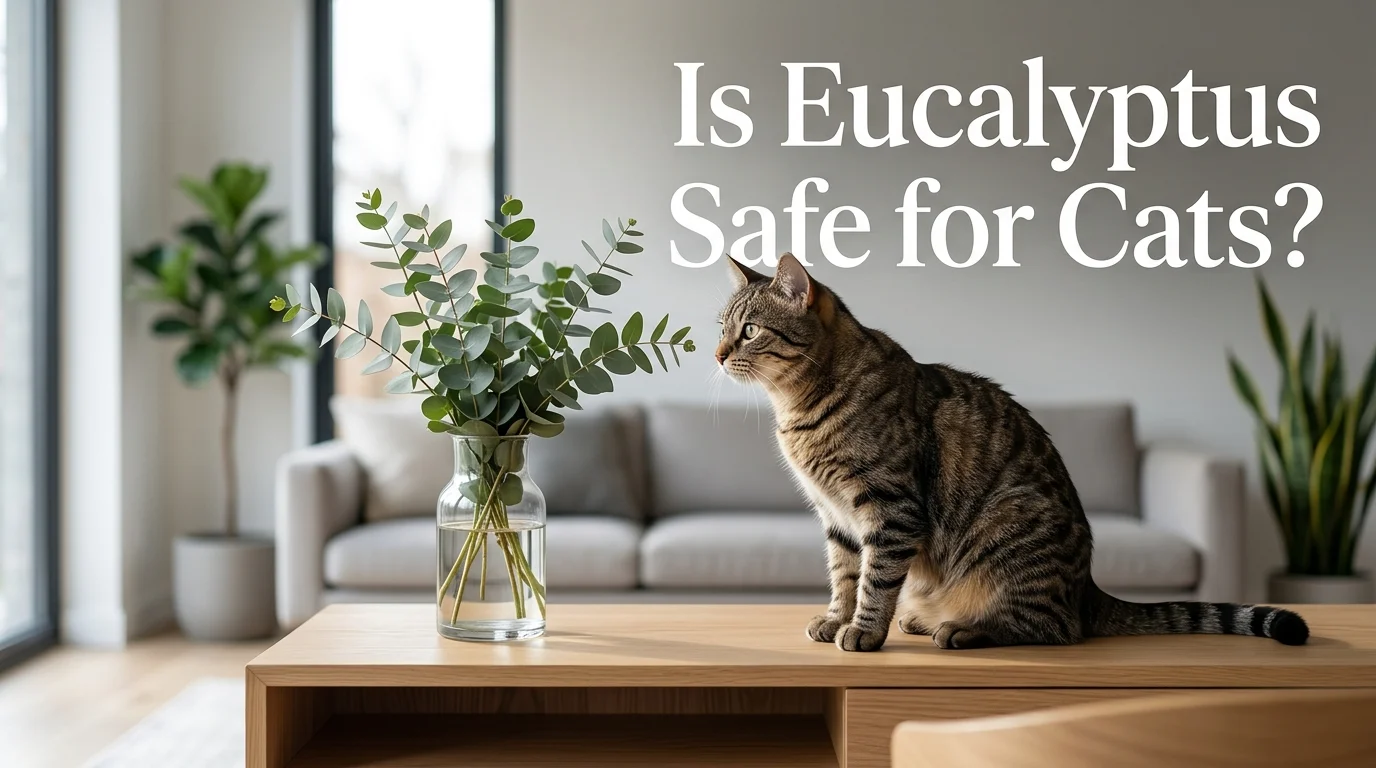
If you searched “is eucalyptus safe for cats,” the short answer is no. The ASPCA lists Eucalyptus species as toxic to cats because they contain eucalyptol. The safest approach is preventing chewing, skin contact, and exposure to concentrated oil.
Direct answer: No. Fresh or dried leaves can cause illness if chewed, and concentrated essential oil creates greater risk. Cats can be exposed by swallowing oil, getting it on their skin, or breathing diffuser emissions. If exposure occurs, contact a veterinarian or the U.S. Animal Poison Control Center promptly.
| Key question | Practical answer |
|---|---|
| Is the plant toxic? | Yes. ASPCA lists the species as toxic to cats. |
| Is concentrated oil safe? | No. Higher concentrations increase the risk of ingestion or skin contact. |
| Are diffusers risk-free? | No. Passive devices can irritate airways, while active devices release microdroplets. |
| What signs matter? | Drooling, vomiting, diarrhea, weakness, wobbliness, tremors, coughing, wheezing, or breathing trouble. |
| What should owners do? | Remove the source, avoid home antidotes, and contact a veterinarian or poison service. |
TL;DR
- Keep fresh plants and dried bundles where cats cannot chew or lick them.
- Never apply concentrated essential oil directly to a cat.
- Avoid running this toxic oil in rooms a cat can enter.
- Get professional advice promptly after a known spill, ingestion, or significant inhalation exposure.
Why This Plant Can Harm Cats
The main concern is eucalyptol, an essential-oil component found across Eucalyptus species. The ASPCA identifies essential oils as the plant’s toxic principle. Reported plant-related signs include salivation, vomiting, diarrhea, depression, and weakness.
Concentrated essential oils create a different level of exposure. The Merck Veterinary Manual notes that cats are deficient in glucuronyl transferase. These oils can also be absorbed through the stomach, skin, lungs, and mucous membranes.
Is Eucalyptus Safe for Cats in Any Form?
Risk depends on form, concentration, route, and amount. A chewed leaf is not the same exposure as concentrated oil on fur. Still, no common household form deserves a “cat-safe” label just because it smells natural.
| Form | Main exposure route | Practical concern |
|---|---|---|
| Fresh leaves | Chewing or swallowing | Can cause gastrointestinal and other toxic signs. |
| Dried leaves or bundles | Chewing, licking, fallen pieces | Drying does not create an established safe form. |
| Eucalyptus essential oil | Swallowing or skin contact | Concentrated exposure can cause serious neurologic signs. |
| Passive diffuser | Vapor plus spill risk | Main concern is respiratory irritation unless liquid contacts the cat. |
| Active diffuser | Inhalation plus microdroplets | Droplets can land on fur and be swallowed during grooming. |
Pet Poison Helpline reports small plant ingestions may cause minor nausea. Concentrated oil exposure can cause more severe signs, including neurologic abnormalities. Any known oil exposure deserves prompt guidance because concentration and dose are difficult to estimate.
Fresh and Dried Leaves Still Belong Out of Reach
A fresh houseplant can tempt a curious cat to chew leaves or stems. Drying the leaves does not create a veterinary-established safe form. Keep decorative bundles where a cat cannot lick, chew, or pull them down.
A shower bundle also remains plant material from a toxic species. Bathrooms can be small spaces, and cats may investigate hanging greenery or fallen pieces. Removing the bundle is simpler than trying to judge an individual cat’s exposure. Elsewhere on the site: Cat Stretching.
Essential Oil and Diffusers Need Extra Caution
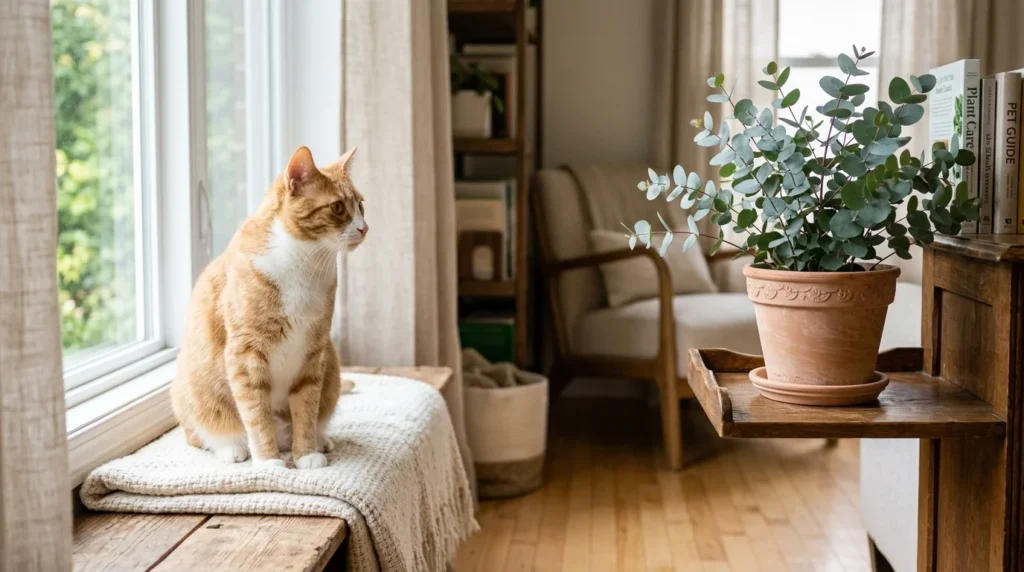
Concentrated oil is more concerning because a small volume contains many plant compounds. Never apply it to a cat’s coat, paws, collar, or bedding. A cat may absorb it through skin or swallow residue while grooming.
Diffuser type changes the route of exposure. The Merck Veterinary Manual says passive diffusers mainly create respiratory irritation unless liquid contacts the pet. Active ultrasonic and nebulizing devices release microdroplets that can settle on fur and later be groomed off.
For eucalyptus oil specifically, the safest household choice is avoiding diffusion where cats can enter. Cats with asthma or other breathing problems may be especially sensitive to airborne irritants. VCA also lists inhalation from a diffuser as a possible toxic exposure route.
Signs of Exposure That Need Attention
Symptoms can appear within minutes or hours, depending on route and concentration. Mild stomach signs can progress if a concentrated product was involved. Breathing changes, tremors, or severe weakness require urgent veterinary attention.
Watch for these signs.
- Drooling or excessive salivation
- Vomiting or diarrhea
- Weakness, unusual sleepiness, or poor appetite
- Wobbliness, tremors, or seizures
- Coughing, wheezing, or rapid breathing
- Open-mouth breathing or obvious respiratory distress
A strong fragrance on the coat or breath can also indicate exposure. Kittens and cats with liver disease may be more sensitive to essential oils. Magazymes ’ 6-month-old cat care guide covers other age-specific care and monitoring basics.
If Your Cat Was Exposed, Do These Things First
Do not wait for symptoms after a known essential-oil spill or ingestion. Remove your cat from the source and prevent further contact. Then call your veterinarian or an animal poison service for case-specific instructions.
- Move the cat away from the source and into fresh air after diffuser exposure.
- Do not induce vomiting or give a home antidote unless a professional instructs you.
- Keep the product bottle, label, or plant sample available for identification.
- If liquid is on fur, prevent grooming when safe and ask how to decontaminate.
- Call your veterinarian, ASPCA Animal Poison Control, or Pet Poison Helpline promptly.
In the United States, ASPCA Animal Poison Control lists 888-426-4435. Pet Poison Helpline lists 855-764-7661 and operates 24/7. Both services may charge a consultation or incident fee, so check current terms when calling.
Open-mouth breathing, collapse, seizures, or marked weakness are emergency signs. Go to an emergency veterinary hospital while another person calls poison control, if possible. Do not delay urgent care while searching online for a home remedy.
Are Candles, Shower Bundles, and Cleaners Safe?
Products marketed as “natural” can still contain concentrated aromatic compounds. Read labels on candles, room sprays, cleaners, balms, and air fresheners. Keep products containing eucalyptus oil out of reach so cats cannot contact spills or residues.
A candle is not the same as an active oil diffuser, but fragrance can still irritate sensitive airways. The bigger risk depends on ingredients, ventilation, and whether liquid oil is accessible. Choose fragrance-free products when you cannot confirm a scented product’s feline safety.
Safer Ways to Keep a Cat-Friendly Home
Fresh air and fragrance-free cleaning reduce unnecessary scent exposure. Store essential oils in closed cabinets, and wipe spills before pets return. Check decorative plants against a trusted toxicity database before bringing them home.
Pet safety also depends on noticing early changes in normal behavior. Magazism’s kitten meowing guide explains common vocal patterns and warning signs. The Magazism Pets section also offers related cat-care and household guidance.
For greenery, check the ASPCA plant database for the exact species. Use the scientific name when possible. Even non-toxic plants can cause stomach upset if eaten. Place any plant where repeated digging or chewing cannot become a daily habit.
Frequently Asked Questions
Is eucalyptus safe for cats if they only smell it?
Smelling a plant from a distance differs from swallowing oil or breathing concentrated diffuser emissions. Strong fragrances can still irritate sensitive cats, especially those with respiratory disease. Avoid deliberate scent exposure and remove your cat if coughing, wheezing, or distress appears.
Can I keep dried leaves in the shower?
Keeping a dried bundle in a cat-accessible bathroom isn’t risk-free. The material still comes from a species the ASPCA lists as toxic. A closed, inaccessible bathroom lowers contact, but removing the bundle is the simpler safety choice.
What if my cat licked one leaf?
A small leaf exposure may cause only minor stomach upset, but outcomes vary. Contact your veterinarian or poison service for advice based on amount and symptoms. Do not induce vomiting unless a professional specifically instructs you.
What if oil got on my cat’s fur?
Prevent grooming if you can do so safely, then call a veterinarian or poison line promptly. Concentrated oil can be absorbed through skin and swallowed during grooming. Follow professional decontamination instructions rather than experimenting with household remedies.
Are any essential oils completely safe for cats?
Veterinary sources emphasize that risk varies by oil, concentration, route, and individual health. Do not apply concentrated oils directly to cats. Ask your veterinarian before using any aromatherapy product in a cat household.
The Bottom Line for Cat Owners
The practical answer is to keep the plant and its concentrated oil away from cats. Fresh or dried leaves can cause illness, while essential oil presents greater risk. Diffusers can add respiratory exposure and may spread droplets onto fur.
If contact occurs, act based on the product and exposure route instead of waiting for severe symptoms. A veterinarian or poison specialist can tell you what to do next. Fast, accurate guidance is safer than guessing about dose or trying a home treatment.