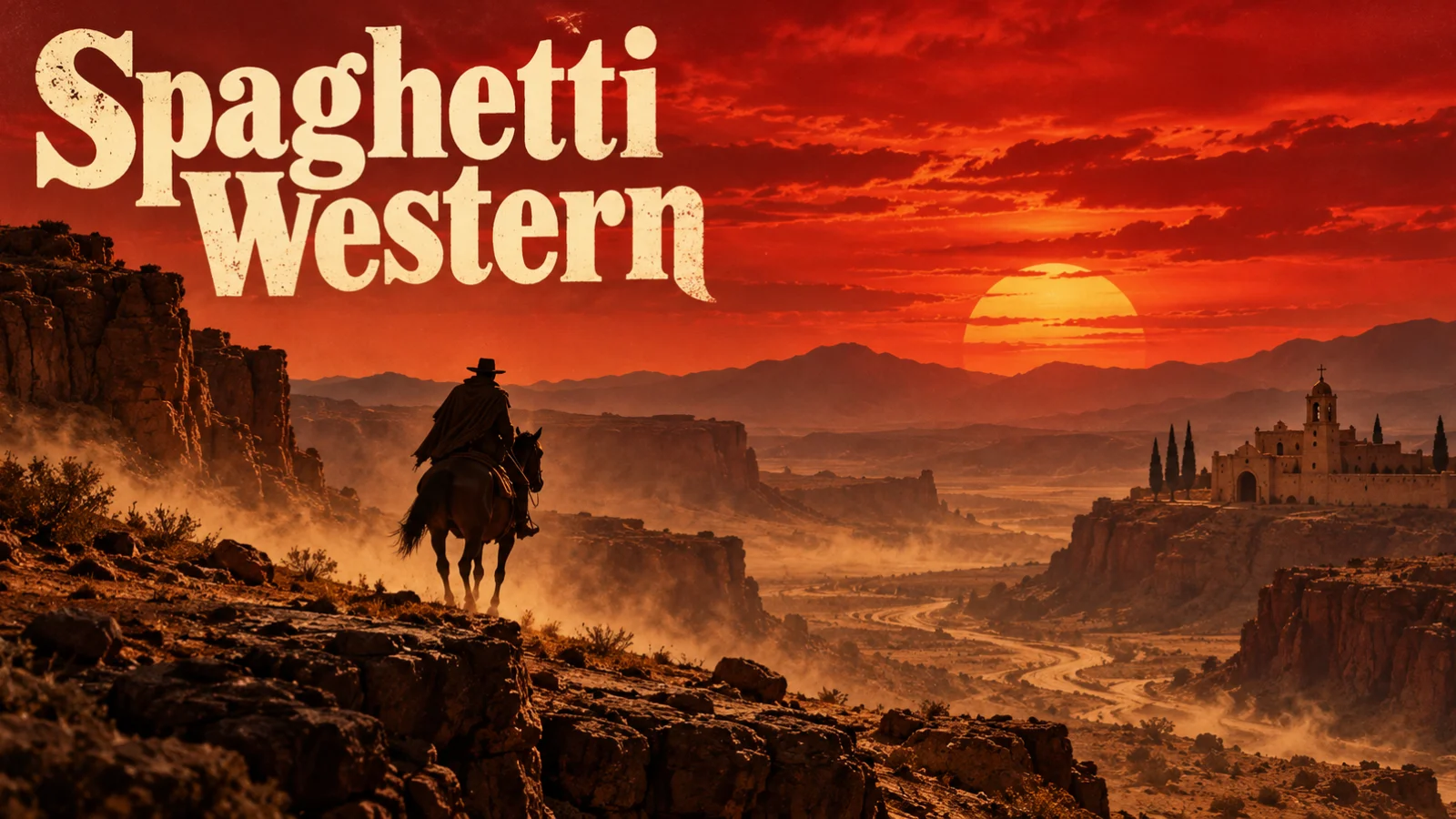
The spaghetti western took familiar American frontier stories and turned their rules upside down. Italian filmmakers replaced clean heroes with drifters, bounty hunters, outlaws, and men chasing money. They also created a style that still shapes action movies today.
Direct answer: A spaghetti western is a European-made Western strongly associated with Italian filmmakers in the 1960s and 1970s. These movies feature morally ambiguous characters, stylized violence, expressive music, and dramatic close-ups. Sergio Leone, Sergio Corbucci, and Ennio Morricone helped define the form.
| Key fact | Details |
|---|---|
| Main era | Mid-1960s through the 1970s |
| Main production countries | Italy and Spain, often with international partners |
| Defining director | Sergio Leone |
| Other major director | Sergio Corbucci |
| Famous composer | Ennio Morricone |
| Signature star | Clint Eastwood |
| Common settings | Desert towns, border regions, isolated frontier communities |
| Famous films | A Fistful of Dollars, Django, The Good, the Bad and the Ugly |
| Typical themes | Greed, revenge, survival, betrayal, political conflict |
| Visual trademarks | Extreme close-ups, wide landscapes, long confrontations |
Key Takeaways
- Italian filmmakers reshaped the Hollywood Western rather than simply copying it.
- Sergio Leone’s A Fistful of Dollars helped establish the recognizable style in 1964.
- Spain frequently doubled for Mexico and the American Southwest.
- Ennio Morricone made music a major storytelling element.
- Antiheroes replaced many traditional white-hat Western protagonists.
- The movement influenced later Westerns, crime films, and action cinema.
What Is a Spaghetti Western?
These films were Westerns produced mainly by European companies, especially Italian ones. Many were international productions involving Spanish, German, French, or other partners. Hundreds of European Westerns appeared during the movement’s peak years. Their filmmakers borrowed the American West but approached it from a different cultural viewpoint. Traditional ideas about law, honor, and frontier heroism became less certain.
Survival, revenge, opportunism, and greed often drove the characters instead. That difference gave the movies their strange and memorable energy. A gunslinger might help innocent people while remaining dangerous and selfish. The audience rarely receives a simple hero or villain to trust.
Magazism readers who enjoy movies, television, and screen characters can also browse the site’s Entertainment coverage. The section covers popular films, television series, actors, and character stories. It provides a natural home for more cinema explainers.
Why Is It Called a Spaghetti Western?
The label referred to the strong Italian involvement behind these European productions. Foreign critics used Italy’s most famous food as a shorthand for the filmmaking movement. The nickname endured long after the films gained serious critical respect. Calling every movie entirely Italian can still be misleading. Many productions combined money, actors, crews, and locations from several European countries.
Spain became especially important because its dry landscapes could resemble the American Southwest. The term therefore describes a filmmaking tradition more than one strict nationality. Style, production history, and the period all matter. That explains why the category can include varied movies sharing recognizable creative DNA.
How Italian Westerns Changed the Cowboy Hero
Classic Hollywood Westerns often centered on sheriffs, settlers, soldiers, ranchers, or principled gunfighters. Their conflicts could be complicated, but heroism usually remained important. Italian filmmakers became more interested in people surviving corrupt and violent environments.
Sergio Leone’s Man with No Name became the clearest example. Clint Eastwood played him as quiet, observant, dangerous, and difficult to read. His character could perform good deeds without becoming a traditional noble hero. This approach made motives more important than labels. Money might matter more than justice, while revenge could replace civic duty. Friendships could also shift whenever circumstances changed.
Modern entertainment still favors protagonists whose morality remains complicated. Magazism’s Marie Moreau character guide examines a newer character facing conflicts involving power, ambition, and responsibility. The genre differs, but complicated motives continue attracting audiences.
The Visual Style Made Every Gunfight Feel Bigger
Leone developed a visual grammar built around contrast. Huge landscapes could suddenly cut to eyes, fingers, boots, or sweating faces. Long periods of stillness made the eventual action feel explosive. The technique changed how a showdown could work. Physical movement was often minimal before the first shot. Editing, framing, sound, and facial expressions carried much of the suspense.
Dust and worn clothing also separated these movies from cleaner frontier adventures. Towns looked exhausted rather than romantic. Gunslingers appeared dirty, tired, sunburned, and physically vulnerable.
Why Ennio Morricone’s Music Matters
Music became another defining part of the style. Composer Ennio Morricone worked extensively with Leone and rejected conventional orchestral expectations. His scores used whistles, guitars, bells, voices, percussion, and unusual sound combinations. These sounds did more than accompany a scene. They could stretch tension before a duel or announce a character’s arrival. Music sometimes seemed almost as important as dialogue.
The famous theme from The Good, the Bad, and the Ugly shows that approach clearly. Its unusual sounds became recognizable far beyond Western audiences. Morricone helped prove that a movie score could become part of a film’s identity.
7 Essential Movies That Explain the Genre
If you’re new to these movies, you don’t need to watch dozens immediately. These seven films show several major directions the movement took. Watching them roughly by release period also reveals how quickly the style developed.
- A Fistful of Dollars (1964): Sergio Leone’s breakthrough helped define the new formula. Clint Eastwood’s restrained gunslinger became an international screen icon.
- For a Few Dollars More (1965): Leone expanded the scale and added Lee Van Cleef. The movie developed the bounty-hunter side of the genre.
- The Good, the Bad, and the Ugly (1966): Leone combined three competing characters with Civil War imagery. Its cemetery showdown became one of Western cinema’s defining sequences.
- Django (1966): Sergio Corbucci offered a darker, muddier, and more openly brutal vision. The film also addressed political and social ideas beneath its violence.
- The Big Gundown (1966): Sergio Sollima blended pursuit, class conflict, and politics. It demonstrates how broad the Italian West could become beyond Leone.
- A Bullet for the General (1967): Damiano Damiani moved toward revolutionary politics and the Mexican Revolution setting. The movie became an important example of the Zapata Western branch.
- Once Upon a Time in the West (1968): Leone turned his established techniques toward a larger frontier epic. The result feels both like a Western celebration and a farewell to its old mythology.
Italian Westerns vs. Classic Hollywood Westerns
The differences were never absolute because American Westerns also explored morally complicated stories. Still, several tendencies separated the European cycle from earlier Hollywood traditions. Those differences explain why the movies felt fresh to international audiences.
| Feature | Italian approach | Traditional Hollywood tendency |
|---|---|---|
| Hero | Drifter, bounty hunter, outlaw | Sheriff, rancher, soldier, settler |
| Morality | Frequently ambiguous | Often clearer moral sides |
| Main motive | Money, revenge, survival | Justice, duty, community |
| Violence | Abrupt and stylized | Usually more restrained historically |
| Landscapes | Spain and European locations | American frontier locations |
| Music | Experimental and highly prominent | More conventional orchestral scoring |
| Camera style | Extreme close-ups and long pauses | More classical framing |
| Tone | Cynical, ironic, harsh | Often romantic or heroic |
These contrasts helped European directors question familiar American myths. Their West could be corrupt, unstable, and openly transactional. Even supposedly respectable institutions rarely guaranteed justice.
Why the Movies Still Feel Modern
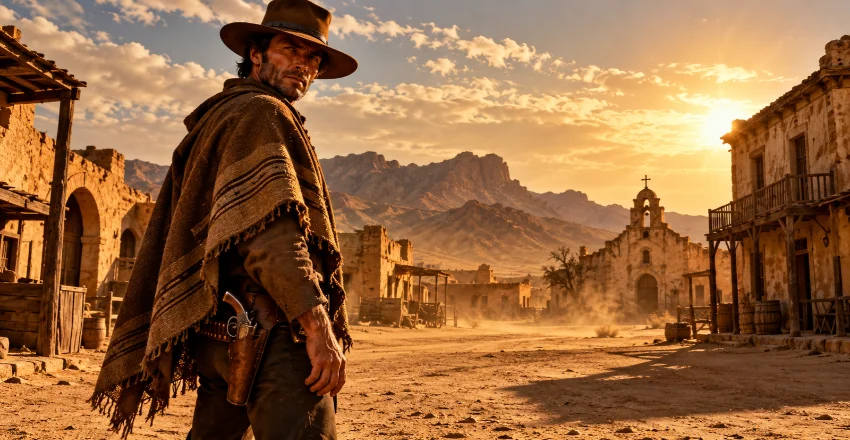
Later filmmakers inherited the tension, antiheroes, exaggerated confrontations, and visual precision developed during this period. Leone’s influence can be seen far beyond movies involving cowboys. The same approach can work in crime, action, science fiction, and revenge stories. The genre also changed expectations about screen heroes. Audiences became comfortable following characters who were selfish, compromised, or morally uncertain.
That character model now appears throughout popular entertainment. Character contrast remains especially useful in family films and animation too. Magazism’s guide to Gru and his brother Dru shows how opposing personalities can drive a story. Different genres use the technique for different effects.
Where Should a Beginner Start?
Start with A Fistful of Dollars if you want to watch the style developing. Move through the Dollars trilogy before trying Corbucci and Sollima. This route makes the movement’s changes easier to recognize. Choose The Good, the Bad, and the Ugly first if you want one large, accessible showcase. It combines Leone’s framing, Morricone’s music, memorable characters, humor, and drawn-out suspense. You can then work backward to understand how that formula developed.
Try Django next if you prefer something harsher. Corbucci’s film demonstrates that the Italian Western was never solely Leone’s creation. Its muddy setting creates a striking contrast with Leone’s sunbaked deserts.
Frequently Asked Questions
What does spaghetti western mean?
A spaghetti western is a European Western associated especially with Italian filmmakers from the 1960s and 1970s. These movies commonly feature antiheroes, stylized violence, stark landscapes, and memorable music. Many productions were filmed partly in Spain rather than the United States.
Were these movies filmed in America?
Many famous examples were filmed primarily in Europe. Spanish locations provided dry mountains, plains, and deserts that could resemble Mexico or the southwestern United States. Studio interiors were also frequently produced in Italy.
Who were the most important directors?
Sergio Leone remains the most internationally famous director associated with the movement. Sergio Corbucci and Sergio Sollima also created major films with distinct styles. Their work demonstrates that the genre contained more variety than Leone alone suggests.
What was Clint Eastwood’s role in their popularity?
Eastwood starred in Leone’s Dollars trilogy and became closely associated with its laconic gunslinger image. A Fistful of Dollars gave him a major international film breakthrough. His restrained performance also helped establish the genre’s influential antihero model.
Why did the genre decline?
The cycle became crowded after its rapid commercial expansion. Comedy Westerns grew more popular during the early 1970s, while familiar formulas became harder to refresh. BFI identifies the later 1970s as the movement’s closing period.
Why These Dusty European Westerns Still Matter
Italian directors borrowed American mythology and returned something stranger, rougher, and more skeptical. They transformed familiar shootouts through unusual framing, morally uncertain characters, and music that demanded attention. Their greatest films now feel inseparable from the broader history of the Western.
Start with Leone’s Dollars trilogy, then move toward Corbucci, Sollima, and the political Westerns. You’ll quickly notice ideas that later filmmakers continued using across many genres. For more movie and television coverage, continue through the Entertainment section.