
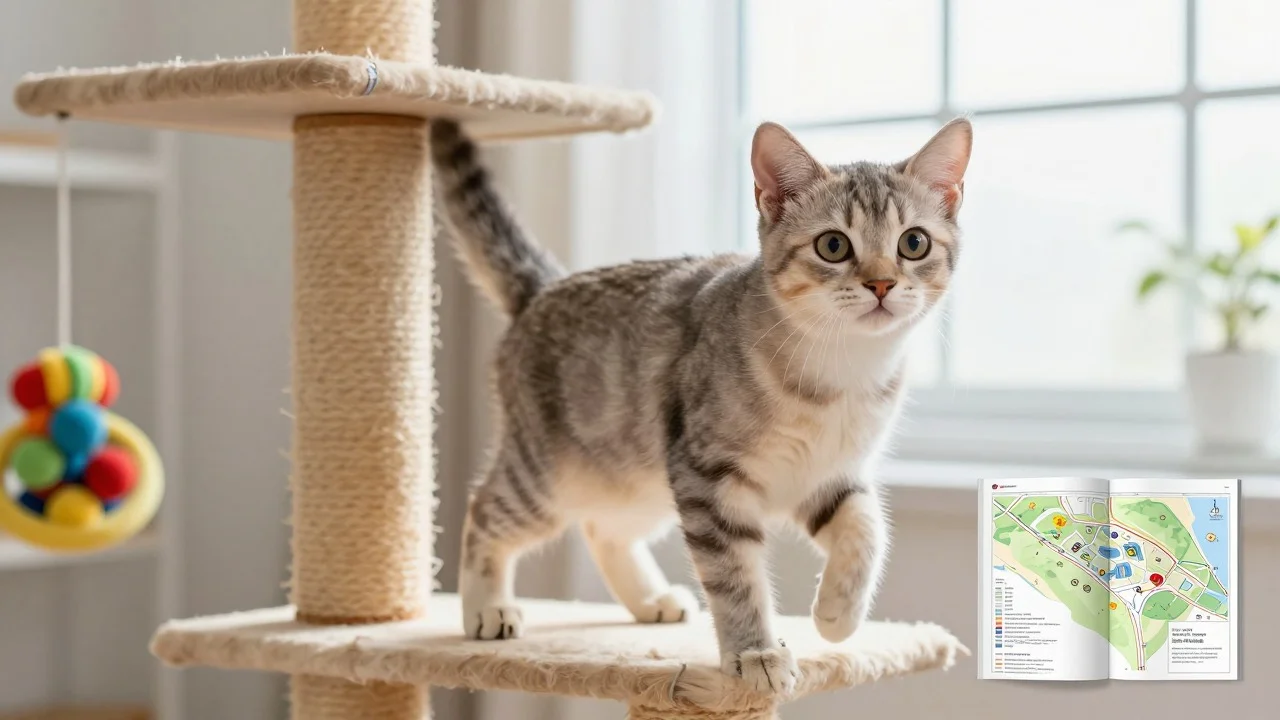
A 6 month old cat can look surprisingly grown-up while still behaving very much like a kitten. At this age, your cat enters an adolescent phase marked by rapid learning, energetic play, continued physical development, and growing independence. The right feeding routine, preventive veterinary care, and daily enrichment can help turn all that kitten energy into healthy adult habits.
Six months is also an important health checkpoint because adult teeth are arriving, nutritional needs are changing, and an unaltered kitten may already be sexually mature. Veterinary guidelines still classify cats under one year old as kittens, so this is not the time to treat your pet like a fully mature adult. Understanding what is normal at this stage makes it easier to notice when something deserves a veterinarian’s attention.
Quick answer: At 6 months, a cat is still a kitten but is entering adolescence. Expect near-adult coordination, intense play, continued growth, and adult teeth coming in. Most kittens should still eat a complete diet formulated for growth, usually in two daily meals, while staying current on vaccines, parasite prevention, and spay/neuter planning.
6 Month Old Cat at a Glance
| What to Check | What to Expect Around 6 Months |
|---|---|
| Life stage | Still a kitten; the kitten life stage continues until about 1 year |
| Weight | Around 6–7 pounds is a useful general reference, but breed, sex, frame, and genetics create substantial variation |
| Growth | Rapid early growth is slowing, but the cat is not necessarily full-grown |
| Food | Complete and balanced food formulated for kitten growth |
| Feeding frequency | Usually about two scheduled meals per day |
| Teeth | Most permanent teeth are arriving; the adult set is generally complete by 6–7 months |
| Behavior | Energetic play, climbing, chasing, scratching, testing boundaries, and growing independence |
| Vet priorities | Vaccination review, parasite prevention, dental check, sterilization status, weight assessment, and identification |
Is a 6 Month Old Cat Still a Kitten?
Yes, a cat at six months is still a kitten. The AAHA/AAFP feline life-stage guidelines define the kitten stage as birth through the first year, with the young-adult stage beginning at one year. Your kitten may already have long legs, adult coloring, excellent coordination, and a more mature face, but development is still taking place.
Growth also does not stop suddenly on the six-month birthday. Purina notes that kittens can reach a substantial proportion of their adult body mass during their first six months, while growth and development continue through the rest of the first year for most cats. Larger breeds can mature more slowly, which is one reason age alone should not determine whether a kitten has reached its final size.
How Much Should a Six-Month-Old Kitten Weigh?
No single weight is correct for every six-month-old kitten. Royal Canin gives about 3 kilograms, or a little over 6.5 pounds, as an average at six months, but genetics, sex, breed, activity, nutrition, and body frame can push a healthy individual above or below that figure. A steadily growing, lean kitten with good muscle condition can therefore be healthier than another kitten that happens to match an online “ideal” number.
Body condition is more useful than chasing an exact scale reading. Cornell describes an ideal body condition as well proportioned, with ribs you can feel beneath a slight fat covering, a visible waist behind the ribs, and only a small abdominal fat pad. Your veterinarian can compare current weight with previous visits and determine whether the growth pattern is appropriate for your individual cat.
Breed makes a particularly noticeable difference at this age. A large-framed kitten may naturally outweigh a smaller domestic cat without being overweight, so size should always be interpreted in context. Magazism’s coverage of Maine Coon cats, for example, highlights just how widely adult feline size can vary among breeds.
Physical Development at Six Months
By six months, most kittens move with the speed and coordination of adult cats even though their bodies are still developing. Muscles strengthen, the lanky proportions of early kittenhood may begin to fill out, and growth gradually becomes less dramatic than it was during the first few months. A healthy kitten should generally appear alert, active, curious, and interested in its surroundings.
The mouth is undergoing one of the biggest changes. Kittens have 26 baby teeth, but the permanent set contains 30 teeth, and most cats have all of those adult teeth by approximately 6–7 months. Mild chewing during teething can be normal, but two teeth occupying the same position can indicate a retained baby tooth that deserves veterinary evaluation.
Sexual maturity can arrive earlier than many owners expect. The Feline Veterinary Medical Association notes that cats can become reproductively active as early as four to five months, sometimes without obvious signs. That means an intact six-month-old female can become pregnant, and an intact male may be able to breed.
What Should a 6 Month Old Cat Eat?
A six-month-old kitten should generally continue eating food formulated for growth rather than switching automatically to an adult maintenance diet. Cornell recommends choosing nutritionally complete and balanced food appropriate for the cat’s life stage, while AAHA/AAFP guidelines continue to classify this age as part of kittenhood. Unless your veterinarian recommends otherwise, kitten nutrition normally remains appropriate through the remainder of the first year.
Meal frequency can become simpler at this point. Cornell states that kittens generally do well with three meals daily until six months of age and that twice-daily feeding is usually appropriate between six months and one year. The correct portion depends on the calorie density of the specific food, your kitten’s current body condition, sterilization status, activity level, and expected adult size.
Measure meals rather than assuming a constantly full bowl is necessary for growth. AAHA notes that obesity prevention begins during kittenhood and that nutritional needs should be reassessed around neutering because sterilization can be associated with weight gain. Regularly checking body condition and adjusting portions is safer than continuing the same amount simply because your kitten still acts hungry.
Fresh water should always be available, whether the diet is wet, dry, or a combination of both. Cornell notes that canned foods typically contain considerably more moisture than dry foods, while either format can be appropriate when the diet is nutritionally complete and balanced. Avoid adding vitamins, minerals, or other supplements unless a veterinarian recommends them, because a balanced kitten food should already provide the nutrients required for growth.
What Behavior Is Normal at Six Months?
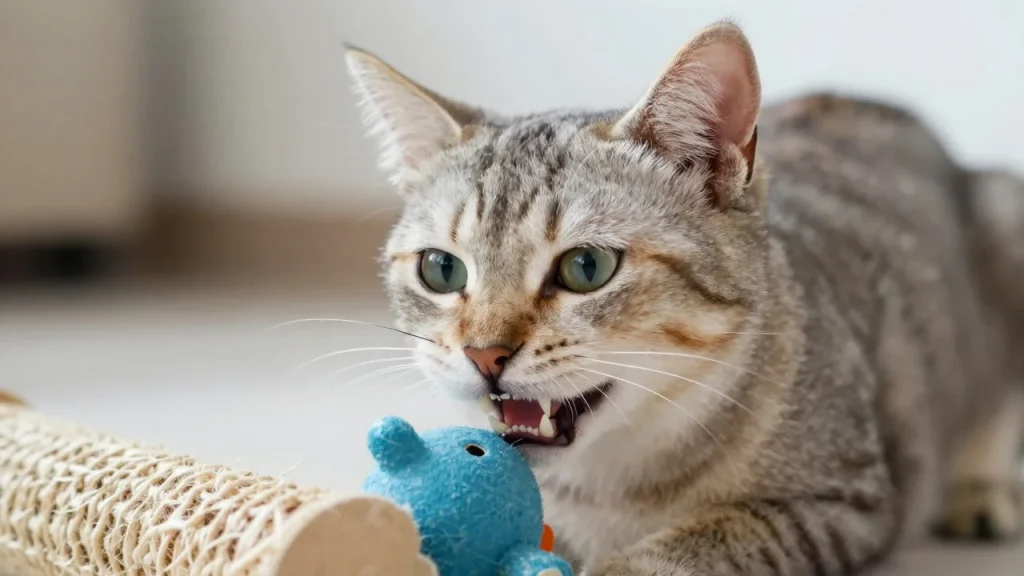
Six-month-old kittens often seem to have two settings: deep sleep or full-speed action. Chasing, stalking, jumping, climbing, pouncing, scratching, carrying toys, and short bursts of high-energy running all reflect normal feline behaviors. AAHA/AAFP guidance emphasizes play, enrichment, scratching opportunities, food puzzles, and other outlets that allow kittens to express those natural behaviors constructively.
Play biting can also become frustrating because the kitten is now stronger than it was a few months earlier. Avoid encouraging attacks on hands or feet, since AAHA specifically recommends discouraging the use of human body parts as toys and using positive reinforcement instead. Wand toys, tossed toys, climbing structures, scratching surfaces, and food puzzles give the kitten more appropriate targets for hunting and play.
This is also a valuable time to keep teaching everyday skills. Calmly practice nail handling, brushing, entering the carrier, brief car rides, mouth handling, and simple rewarded cues to make future veterinary care easier. Consistency matters more than punishment, because frightening or physically correcting a kitten can increase stress without teaching the behavior you actually want.
Veterinary Care a Six-Month-Old Kitten May Need
Six months is an excellent time to review the complete veterinary record rather than assuming kitten medical care is finished. Vaccination history, parasite exposure, diet, body condition, teeth, behavior, reproductive status, and lifestyle can all affect the plan for the next several months. AAHA/AAFP guidelines recommend preventive examinations throughout kittenhood and individualized decisions based on each cat’s lifestyle and risk.
Review Vaccinations
Core feline vaccination planning may still involve action around this age. AAHA/AAFP guidance identifies feline calicivirus, feline herpesvirus-1, feline panleukopenia, rabies, and feline leukemia virus vaccination as important considerations during kittenhood, with the exact schedule depending on previous doses, product labeling, age, and exposure risk. Rabies requirements also vary by jurisdiction, so U.S. owners should follow both their veterinarian’s recommendation and applicable state or local law.
Do not rely only on a kitten’s age when deciding whether the series is complete. An adopted kitten may have an incomplete or uncertain vaccination history, while another may already have received all age-appropriate doses. Bring any shelter, breeder, rescue, or previous veterinary records to the appointment so the veterinarian can determine what is actually due.
Discuss Spaying or Neutering
If your kitten has not been spayed or neutered and is not intended for breeding, discuss the procedure with your veterinarian now. The Feline Veterinary Medical Association supports sterilizing cats not intended for breeding by five months of age because reproductive activity can begin as early as four to five months. Individual health conditions can affect surgical timing, so your veterinarian should make the final recommendation for your kitten.
Sterilization is also a good moment to reconsider calories and weight monitoring. Energy needs can change following neutering, and continuing oversized kitten portions indefinitely may encourage excess weight gain. Ask your veterinary team to show you how to assess body condition at home so you can adjust food before weight becomes a problem.
Check the Adult Teeth
A dental check is especially useful around six months because permanent teeth replace the last baby teeth. Most kittens have the full set of 30 permanent teeth by six to seven months, but occasionally a baby tooth remains beside an erupting adult tooth. Persistent deciduous teeth can contribute to crowding, abnormal alignment, trapped food, and future dental problems, so contact your veterinarian if you see a “double tooth.”
This is also a good age to establish home dental care after active teething settles. Gentle mouth handling introduced early can make brushing and future examinations much less stressful. Your veterinary team can recommend feline-safe dental products and demonstrate an appropriate brushing technique.
Review Parasite Prevention and Identification
Parasite prevention should match your kitten’s environment and exposure, not a one-size-fits-all plan. Indoor cats can still encounter fleas, mosquitoes, intestinal parasites, or other risks depending on location, other household animals, travel, and accidental outdoor access. A veterinarian can recommend appropriate flea, tick, heartworm, and intestinal parasite strategies for your part of the United States.
Address identification at the same visit. A secure collar with identification can help, but microchipping provides another permanent way to connect a lost cat with its owner when the registration information is current. AAHA/AAFP feline life-stage guidance includes identification options such as microchipping among the preventive topics owners should discuss.
A Healthy Daily Routine at Six Months
Predictability can make adolescence easier for both the cat and the household. A regular rhythm of measured meals, interactive play, independent enrichment, litter-box maintenance, grooming, and quiet rest gives the kitten appropriate outlets before boredom turns into destructive behavior. The exact schedule can fit your household as long as the kitten receives adequate nutrition, movement, attention, and opportunities to perform natural feline behaviors.
| Part of the Day | Useful Routine |
|---|---|
| Morning | Measured kitten-food meal, fresh water, litter-box check, short interactive play |
| Daytime | Safe toys, scratching surfaces, climbing options, window views, food puzzle if appropriate |
| Evening | Second measured meal, active wand-toy or chase session, brief training or grooming |
| Daily | Observe appetite, drinking, urine, stool, energy, movement, and general behavior |
| Weekly | Weigh if practical, inspect ears and coat, check nails, and monitor body condition |
Litter-box habits deserve particular attention because a sudden change can reveal either stress or illness. Cornell recommends providing one box for each cat in the household plus an additional box and keeping them clean and appealing. Consistent elimination habits at six months are expected, so repeated accidents shouldn’t be dismissed as adolescent misbehavior.
For more general animal and feline reading, Magazism’s Pets section can provide a natural next step for readers exploring related topics. Keeping related information within a clear topic cluster also makes it easier for readers to move from basic kitten development to breed, behavior, and long-term care content.
Warning Signs That Deserve Veterinary Attention
A playful adolescent kitten can have occasional quiet days, but clear changes from normal behavior deserve attention. Cornell identifies loss of appetite, persistent vomiting or diarrhea, weight loss, eye or nasal discharge, unusual thirst or urination, painful or difficult urination, breathing problems, lethargy, and rapidly developing swelling among signs that warrant veterinary evaluation. Because cats can hide illness, a change in normal habits may be more meaningful than how dramatic a symptom initially appears.
Watch especially for these changes.
- Refusing food or showing a substantial decrease in appetite.
- Repeated vomiting or persistent diarrhea.
- Losing weight instead of continuing a healthy growth trend.
- Straining, crying, or repeatedly visiting the litter box without producing normal urine.
- Difficulty breathing, rapid breathing, collapse, or severe weakness.
- Ongoing eye or nose discharge, persistent coughing or sneezing, or marked lethargy.
- A painful mouth, difficulty eating, or an adult tooth erupting beside a retained baby tooth.
Difficulty breathing, collapse, severe weakness, or an inability to pass urine can require urgent veterinary attention rather than waiting for a routine appointment. A kitten that stops eating and begins losing weight should also be evaluated, because prolonged food refusal can become medically serious in cats. If youare unsure whether a symptom can wait, contacting your veterinarian or a veterinary emergency service is safer than trying to diagnose the problem at home.
Frequently Asked Questions
What Is a Healthy Weight at Six Months?
An average around 6–7 pounds can be a useful broad reference, and Royal Canin cites approximately 3 kilograms, or just over 6.5 pounds, at six months. However, breed, sex, genetics, body frame, and individual growth rate create substantial variation. The best measure is a healthy body condition and consistent growth pattern assessed with your veterinarian rather than a single target number.
How Often Should You Feed a Six-Month-Old Kitten?
Cornell recommends that kittens generally move from three meals per day to about two meals per day between six months and one year. Use an appropriate kitten-food feeding guide for the daily quantity, then adjust for body condition, activity, and veterinary advice. Measure the total daily portion so treats and repeated refills don’t quietly push calorie intake too high.
Can a Six-Month-Old Kitten Eat Adult Cat Food?
Most six-month-old kittens should remain on a nutritionally complete food formulated for growth unless their veterinarian recommends a different diet. AAHA/AAFP life-stage guidelines still classify cats as kittens through the first year, and their nutritional needs differ from those of fully mature adults. A planned transition to adult food is usually considered closer to maturity rather than automatically at six months.
Can a Kitten Get Pregnant at Six Months?
Yes, pregnancy is possible at six months. The Feline Veterinary Medical Association states that reproductive activity can begin as early as four to five months, even when owners have not noticed obvious physical signs. Keep intact males and females securely separated, and discuss sterilization with your veterinarian if you don’t plan to breed.
Why Is My Six-Month-Old Kitten Biting Me?
Biting at this age often occurs during overexcited play, hunting-style behavior, or interactions in which hands have become treated like toys. Redirect the kitten toward wand toys, tossed toys, or other objects and reward calmer interaction rather than wrestling with bare hands. AAHA/AAFP guidance specifically recommends avoiding hands and feet as kitten toys and using positive reinforcement to build appropriate behavior.
Is a Six-Month-Old Kitten Fully Grown?
Usually not, even when the kitten already looks close to adult size. Most cats continue developing during the remainder of their first year, and larger breeds can take longer to reach their mature size. Continue monitoring growth and body condition rather than reducing food simply because the cat has started to look adult.
Helping Your Kitten Grow Into a Healthy Adult
A 6 month old cat is at one of the most entertaining and important stages of kittenhood: physically capable, intensely curious, and still learning habits that may last for years. Keep feeding an appropriate growth diet, provide daily play and enrichment, review vaccines and parasite prevention, check sterilization and dental status, and watch for changes in appetite, weight, litter-box use, or behavior. Those simple routines provide a strong bridge between early kittenhood and a healthy young-adult life.
Your veterinarian remains the best source for recommendations tailored to your kitten’s breed, body condition, medical history, diet, and lifestyle. General age guidelines help you know what to expect, but individual cats do not all grow or mature on the same schedule. If something about your kitten’s growth, eating, teeth, behavior, or health seems unusual, a veterinary examination is more useful than comparing your cat with a generic online chart.