
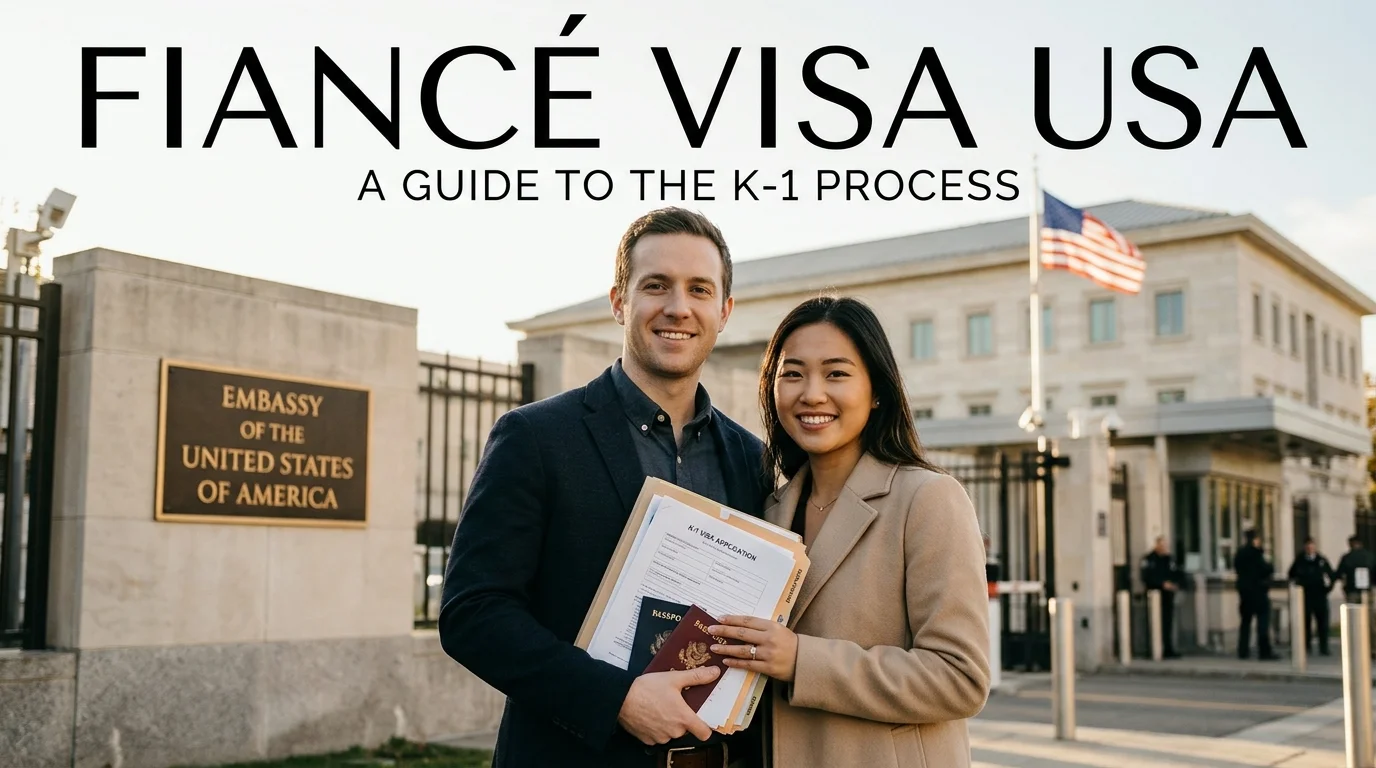
A fiance visa USA application lets an eligible foreign fiancé enter the United States to marry a U.S. citizen. The couple must marry within 90 days after the foreign partner enters the country. After marriage, the foreign spouse can usually apply for permanent residence through adjustment of status.
Direct answer: The K-1 fiancé visa is designed for a foreign citizen engaged to a U.S. citizen. The American partner files Form I-129F first. After approval and consular processing, the foreign fiancé can enter the United States and must marry the petitioner within 90 days.
| Key fact | Current information |
|---|---|
| Visa category | K-1 nonimmigrant fiancé visa |
| Eligible sponsor | U.S. citizen |
| Initial petition | Form I-129F |
| USCIS I-129F filing fee | \$675 |
| K visa application fee | \$265 |
| Marriage deadline | Within 90 days of U.S. entry |
| In-person meeting rule | Generally within two years before filing |
| FY2026 I-129F median | 8.2 months through August 30, 2026 |
| After marriage | Apply for adjustment of status if eligible |
The table summarizes federal requirements and currently published government fees. Medical examination, translation, travel, and document costs vary by applicant and country. Processing after USCIS approval also depends on the National Visa Center and the assigned U.S. embassy.
What Is a K-1 Fiance Visa?
The K-1 is a nonimmigrant visa for a foreign citizen engaged to a U.S. citizen. It allows entry for marriage rather than tourism or general residence. The marriage must occur within 90 days of admission to the United States.
Only a U.S. citizen can petition for a foreign fiancé through this category. A lawful permanent resident cannot sponsor a fiancé using the K-1 process. Permanent residents generally need a different family-based immigration route after marriage.
Fiance Visa USA Eligibility Requirements
A couple must satisfy several requirements before filing Form I-129F. Both partners must normally be legally free to marry each other. They must also genuinely intend to marry within the required 90-day period.
The main eligibility requirements include:
* The petitioner must be a U.S. citizen. * Both partners must be legally free to marry. * The couple must intend to marry within 90 days after entry. * They generally must have met in person during the previous two years. * The relationship must be genuine rather than created for immigration benefits. * Previous marriages must have legally ended before filing.
USCIS allows limited exceptions to the two-year meeting requirement. An exception may involve extreme hardship for the U.S. petitioner. Certain strict cultural or social customs can also support an exception.
Applicants with previous marriages should keep their final divorce documents available. Magazism explains the difference between a decree and other divorce records in its guide to divorce decrees. That distinction can matter when immigration authorities require evidence that a previous marriage legally ended.
How to Apply for a K-1 Visa in 7 Steps
The process involves USCIS, the Department of State, a U.S. embassy or consulate, and U.S. border officials. Approval at one stage does not guarantee approval at every later stage. Couples should keep copies of every filing, receipt, and supporting document.
1. Confirm that both partners qualify. Check citizenship, marriage eligibility, the meeting requirement, and the planned U.S. wedding. 2. File Form I-129F with USCIS. The U.S. citizen submits the petition with the required evidence and filing fee. 3. Wait for USCIS adjudication. USCIS reviews the petition and may request more evidence before making its decision. 4. Continue through the National Visa Center. An approved petition receives a case number before transfer to the appropriate embassy or consulate. 5. Complete Form DS-160 and prepare documents. The foreign fiancé submits the online visa application and follows embassy-specific instructions. 6. Complete the medical examination and visa interview. An authorized panel physician must perform the required medical examination. 7. Enter the United States and marry. After admission, the couple has 90 days to complete a legal marriage.
Applicants planning international travel can also browse Magazism’s Travel section for broader travel information. Embassy instructions should still control all visa-specific preparations. Immigration requirements can change independently from ordinary travel guidance.
How Much Does a Fiancé Visa Cost in 2026?
The federal costs begin before the foreign partner reaches the United States. USCIS currently lists the general Form I-129F filing fee at \$675. The Department of State currently lists the K visa application processing fee at \$265.
| Expense | Published amount or treatment |
|---|---|
| Form I-129F filing fee | \$675 |
| K visa application fee | \$265 |
| Medical examination | Varies by country and physician |
| Translation and document costs | Vary |
| Travel to embassy or consulate | Varies |
| Form I-485 after marriage | \$1,440 for the standard adult filing fee |
The K-1 stage is therefore not the couple’s final immigration expense. USCIS lists the standard Form I-485 filing fee at \$1,440 under its current fee structure. Work authorization, travel documents, vaccinations, and other needs can create additional costs.
Government fees can change, so applicants should verify them shortly before filing. Paying an outdated amount can create avoidable filing problems. The official USCIS and State Department fee pages should take priority over older articles.
How Long Does the K-1 Process Take?
USCIS reports an FY2026 national median of 8.2 months for Form I-129F through August 30, 2026. That figure covers only the USCIS petition stage and represents a median. It does not promise an individual case will finish within 8.2 months.
Additional time is needed for NVC handling, embassy scheduling, the medical examination, and the interview. Administrative processing can also extend a case after an interview. The State Department therefore does not provide one universal K-1 completion time.
Couples should avoid planning a nonrefundable wedding around an estimated approval date. Case speed can vary by workload, evidence quality, and consular availability. A flexible wedding plan reduces financial pressure when government processing changes unexpectedly.
Documents Commonly Needed for the Visa Interview
Document requirements can differ by embassy, so applicants should follow their assigned post’s instructions. The State Department provides a general list of documents commonly required for K-1 processing. Originals, certified translations, or additional local documents may also be requested.
Common interview materials include the following.
* A valid passport. * DS-160 confirmation page. * Birth certificate. * Police certificates where required. * Divorce or death records for previous spouses. * Medical examination results. * Visa photographs. * Evidence of the genuine relationship. * Evidence of financial support. * Embassy-specific documents. * Proof of visa fee payment.
Relationship evidence should tell a consistent story rather than overwhelm the officer with random material. Travel records, photographs, communications, and evidence of visits can support the relationship history. Information across forms and supporting documents should also remain consistent.
Readers handling other family-law paperwork can explore Magazism’s Law section for related legal explainers. Immigration applicants should still rely on USCIS and State Department instructions for federal filing requirements. General articles cannot replace case-specific legal advice.
What Happens After the K-1 Holder Enters the United States?

Admission begins the 90-day marriage period. The foreign partner must marry the same U.S. citizen who filed the petition. The K-1 route is not designed for entering and then marrying someone else.
After the marriage, an eligible spouse can file Form I-485 to seek lawful permanent residence. The adjustment process is separate from K-1 visa issuance. Marriage alone does not automatically produce a green card.
Travel and employment also require careful planning after arrival. A K-1 entrant should not assume the visa itself provides unrestricted work or international travel rights. USCIS provides separate procedures for employment authorization, adjustment of status, and travel documents.
Can Children Come With a K-1 Applicant?
Eligible unmarried children may be eligible for K-2 visas. The State Department says qualifying children may accompany the K-1 parent or follow later. Separate timing and age requirements apply.
A child who follows later must still meet the applicable K-2 requirements. Families should identify all qualifying children during the petition and visa process. Delayed planning can create problems when age or visa-validity rules become relevant.
Common Mistakes That Can Delay a Case
Many delays come from documentation or consistency problems rather than unusual legal issues. Couples should review every submission before sending it. They should also respond carefully if USCIS or an embassy requests additional information.
Common avoidable problems include the following.
* Filing before both partners are legally free to marry. * Weak evidence of the required in-person meeting. * Missing signatures or required documents. * Inconsistent dates across forms and relationship evidence. * Ignoring embassy-specific interview instructions. * Using outdated filing fees. * Scheduling the medical examination incorrectly. * Assuming USCIS approval guarantees visa issuance. * Making fixed wedding arrangements before visa issuance.
The approved I-129F petition is normally valid for four months. A consular officer can extend its validity when visa processing continues beyond that period. Applicants should follow embassy instructions rather than assume an expired approval automatically ends the case.
Frequently Asked Questions
What is a fiancé visa USA application used for?
It allows an eligible foreign fiancé of a U.S. citizen to travel to America for marriage. The couple must marry within 90 days after admission. The foreign spouse can then adjust status when eligible.
Can a green card holder sponsor a K-1 fiancé?
No, the K-1 petitioner must be a U.S. citizen. Lawful permanent residents cannot use this category to bring an unmarried fiancé to America. They may have family-based options after marriage instead.
Do couples have to meet before filing Form I-129F?
Generally, they must have met in person during the two years before filing. USCIS permits narrow exceptions involving qualifying hardship or certain established cultural practices. Couples requesting an exception should carefully document the applicable circumstances.
Does the 90-day period start when the visa is issued?
No, the marriage deadline starts after the K-1 holder enters the United States. Visa issuance and U.S. admission are different events. Couples should calculate their marriage deadline from the admission date.
How long is a K-1 visa valid for entry?
The State Department says the visa can allow one admission during its validity period. That validity can be up to six months from issuance. The 90-day marriage requirement begins after admission, not six months after issuance.
Is the K-1 visa automatically a green card?
No, K-1 status does not itself provide permanent residence. The couple first marries after the foreign fiancé enters America. The foreign spouse then generally files for adjustment of status to pursue a green card.
The Next Step for Couples
Start by confirming eligibility before paying fees or assembling a large application package. Then download current forms and instructions directly from USCIS and the State Department. Keep every receipt, filing copy, civil record, and relationship document in one organized case file.
This article provides general information rather than individualized legal advice. Complicated immigration histories, criminal records, prior violations, or unusual relationship circumstances may require professional guidance. Checking official instructions before each filing remains the safest way to avoid outdated requirements.