
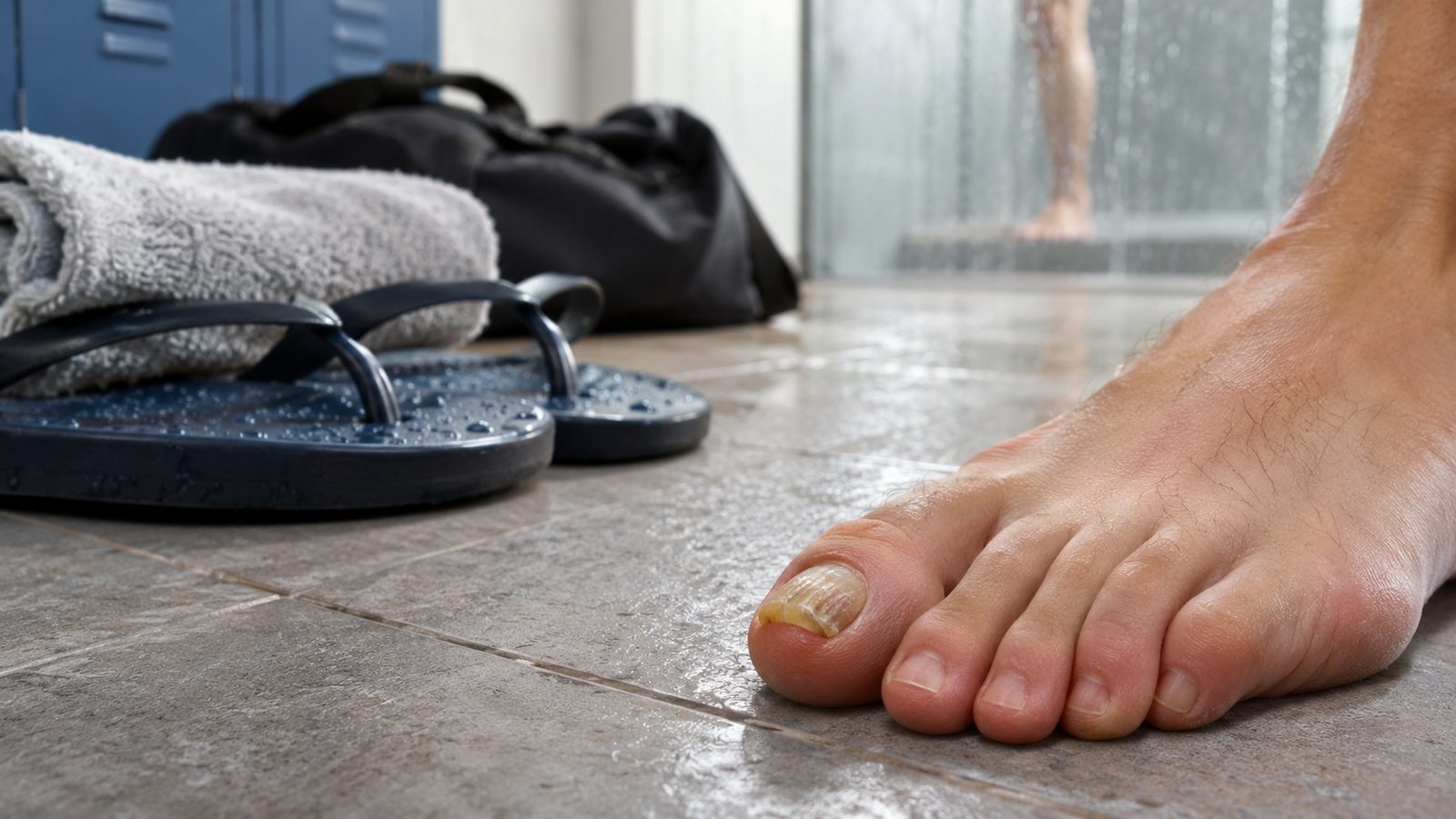
A yellow, thick, or crumbly toenail may signal a fungal nail infection called onychomycosis. What causes toenail fungus is usually exposure to fungi combined with an opportunity for them to enter the nail. Moisture, small injuries, athlete’s foot, and certain health conditions can make that infection easier to develop. Direct answer: Toenail fungus usually starts when dermatophyte fungi enter through tiny openings around or beneath the nail. Warm, damp environments help them survive. Athlete’s foot, sweaty shoes, nail injuries, shared showers, older age, diabetes, circulation problems, and weakened immunity can increase your risk.
Toenail Fungus at a Glance
| Question | Quick answer |
|---|---|
| Medical name | Onychomycosis |
| Main cause | Fungal organisms, especially dermatophytes |
| Common entry point | Tiny cracks around the nail or nearby skin |
| Common sources | Athlete’s foot, damp floors, contaminated tools, shared items |
| Helpful conditions | Warmth, moisture, sweating, tight footwear |
| Higher-risk groups | Older adults and people with diabetes or circulation problems |
| Typical changes | Thickening, discoloration, brittleness, crumbling |
| Can it spread? | Yes, including between nails and nearby skin |
| Diagnosis | A clinician may examine or test nail material |
Key Takeaways
* Dermatophytes cause most fungal nail infections. * Athlete’s foot can spread from nearby skin into a toenail. * Warm and damp footwear creates favorable conditions for fungi. * Small cracks or nail injuries can provide an entry point. * Locker rooms and shared showers can expose bare feet to fungi. * Diabetes, poor circulation, and weakened immunity increase risk. * Not every thick or discolored nail is caused by fungus. * Early medical confirmation can prevent unnecessary treatment.
What Causes Toenail Fungus in the First Place?
Toenail fungus develops when fungal organisms reach the nail and begin growing within its keratin-rich tissue. Dermatophytes are the most common organisms involved, according to the CDC. Yeasts and non-dermatophyte molds can cause some infections too. The fungus often reaches the nail through a microscopic opening near the nail edge or surrounding skin. You may never notice the opening because it can be extremely small. Repeated pressure, trimming, sports, and ordinary foot injuries can create these vulnerable areas. Toenails are especially exposed because feet spend long periods inside enclosed footwear. Shoes can trap heat and perspiration around the toes. Those conditions do not create fungus, but they help fungi survive after exposure.
1. Dermatophyte Fungi Are the Most Common Cause
Dermatophytes are fungi that can use keratin as a nutrient source. Keratin is a major structural protein in skin and nails. Species from groups including Trichophyton are common causes of nail infections. Current Cleveland Clinic guidance says dermatophytes cause most cases of nail fungus. Non-dermatophyte molds account for a smaller share. Yeast infections are less common in toenails than dermatophyte infections. This distinction matters because several organisms can produce similar nail changes. Their treatment needs may also differ. A clinician may therefore test the nail before recommending prescription treatment.
2. Athlete’s Foot Can Spread Into the Toenails
Athlete’s foot is a fungal infection of the skin, usually around the toes or soles. The same kinds of fungi can sometimes move from infected skin into a nail. This connection makes untreated athlete’s foot an important risk factor. The Mayo Clinic lists previous athlete’s foot among common risk factors. Cracked or irritated skin can also give fungi more opportunities to enter. Treating fungal skin infections may therefore help protect nearby toenails. Check your skin when you notice suspicious nail changes. Peeling, scaling, itching, or cracking between the toes may suggest athlete’s foot. A healthcare professional can help distinguish fungal problems from other skin conditions.
3. Warm, Sweaty Shoes Help Fungi Survive
Fungi commonly grow well in warm and moist environments. Closed shoes can create those conditions when feet sweat for hours. Wearing damp socks for long periods adds more moisture around the toes. People with excessive sweating may face greater exposure to these conditions. Tight footwear can also rub against nails and surrounding skin. That combination of moisture and repeated trauma can raise infection risk. Choose shoes that fit properly and allow reasonable airflow. Change damp socks after exercise or work. Magazism’s broader healthy-habits guide also explains why routine preventive habits matter.
4. Public Showers, Pools, and Locker Rooms Increase Exposure
Shared damp floors can expose your feet to fungi left by other people. Locker rooms, public showers, pool areas, and communal changing spaces are common examples. Walking barefoot increases direct contact with these surfaces. The American Academy of Dermatology advises that fungi can survive on contaminated floors and objects. Exposure does not guarantee that an infection will develop. The organism still needs an opportunity to establish itself around the nail. Wear shower shoes or sandals in communal wet areas. Dry your feet carefully afterward, including between the toes. These simple habits reduce moisture and direct surface contact.
5. Small Nail Injuries Can Give Fungus an Entry Point
A toenail does not need a dramatic injury before infection becomes possible. Repeated pressure from shoes can produce tiny cracks around the nail. Sports, running, dropped objects, and aggressive trimming can also damage nail tissue. The CDC notes that fungal organisms can enter through small openings around nails. Damaged nails may become easier for fungi to colonize. Thickened or distorted nails can also trap debris and moisture. Trim nails straight across without cutting deeply into the corners. Avoid tearing loose nail edges with your fingers. Properly fitting shoes can reduce repeated contact between the nail and toe box.
6. Shared Nail Tools and Personal Items Can Spread Fungi
Nail clippers can carry fungal material when they are shared without proper cleaning. Towels, socks, and shoes may also transfer organisms between people. Household exposure becomes more relevant when someone already has athlete’s foot or a fungal nail infection. The AAD specifically identifies contaminated grooming tools and shared items as possible sources. Nail salons should follow appropriate sanitation procedures between customers. At home, individual nail tools are the safer choice. Do not share clippers, files, socks, or shoes with someone who has a suspected fungal infection. Wash reusable towels and socks regularly. You can browse more preventive health topics in Magazism’s Health section.

7. Older Age Raises the Risk
Fungal nail infections become more common with age. Nails may grow more slowly, and circulation to the feet can decrease. Years of accumulated exposure also provide more opportunities for infection. The Merck Manual lists older age among established risk factors. Nail thickening and repeated minor trauma also become more common over time. These changes can make toenail problems harder to identify by appearance alone. Older adults should not assume every yellow or thick nail is fungal. Psoriasis, injuries, and other nail disorders can look similar. Testing can help establish the correct cause before treatment starts.
8. Diabetes and Poor Circulation Increase Vulnerability
Diabetes is associated with a higher risk of fungal nail infections. Reduced blood flow can also affect the body’s ability to respond to infection. Foot injuries may become more significant when healing is impaired. People with diabetes should take suspicious foot changes seriously. The Mayo Clinic advises speaking with a healthcare professional when diabetes and possible nail fungus occur together. Pain, bleeding, swelling, or difficulty walking also deserve medical attention. Routine preventive care matters when chronic conditions affect the feet. Magazism’s discussion of preventive health care explains the broader value of catching health problems early. Regular foot checks can serve the same preventive purpose.
9. A Weakened Immune System Can Make Infection Easier
Your immune system helps control organisms that reach the skin and nails. Certain diseases or medications can weaken those defenses. That can increase susceptibility to fungal infections or make them harder to clear. The CDC identifies weakened immunity as an important factor across fungal diseases. Medical treatments that suppress immunity can also change a person’s risk. Individual risk depends on the condition, medication, exposure, and overall health. People with weakened immunity should seek professional advice for suspicious nail changes. Self-diagnosis can delay appropriate care when another disorder is responsible. A confirmed diagnosis also helps clinicians choose suitable treatment.
Is Toenail Fungus Caused by Poor Hygiene?
Poor foot care can increase certain risk factors, but it does not fully explain fungal nail infections. A clean person can still encounter fungi in shared spaces or develop athlete’s foot. Age, health conditions, sweating, footwear, and nail injuries also influence risk. Good hygiene remains useful because it reduces moisture and contaminated material around the feet. Wash your feet regularly and dry them thoroughly. Keep socks, shoes, and nail tools clean as part of routine care. Avoid treating an infection as a personal cleanliness failure. Fungal organisms exist in ordinary environments. The goal is reducing exposure and removing conditions that help them grow.
Can Mold in Your House Cause Toenail Fungus?
Household mold and fungal nail infections are not the same problem. Nail infections are usually caused by dermatophytes, although certain molds can sometimes infect nails. Seeing mold in a bathroom does not mean it caused your toenail changes. Environmental moisture can support many kinds of fungi, which often creates confusion. Magazism’s article on common mold myths and facts explains indoor mold separately. Nail fungus should be evaluated based on the nail and relevant exposures. Do not assume that removing household mold will cure an infected toenail. Established nail infections often need their own treatment. Diagnosis matters because several nonfungal nail conditions look similar.
How Can You Lower Your Risk?
Prevention focuses on limiting fungal exposure, keeping feet dry, and protecting nail tissue. No single habit can guarantee prevention. Combining several practical steps offers better protection. Try these measures:
* Wash your feet and dry them thoroughly. * Change sweaty or damp socks promptly. * Wear breathable shoes that fit correctly. * Rotate footwear so shoes can dry between uses. * Use sandals in public showers and locker rooms. * Avoid sharing shoes, socks, towels, or nail clippers. * Keep toenails trimmed without cutting surrounding skin. * Treat athlete’s foot instead of ignoring it. * Choose nail salons that sanitize tools correctly.
These steps are especially useful if you have had a fungal infection before. Reinfection can occur after treatment. Keeping shoes, socks, skin, and grooming tools dry and clean may reduce that risk.
When Should You See a Healthcare Professional?
Consider professional care when a nail becomes increasingly thick, discolored, brittle, or misshapen. Similar changes can result from psoriasis, trauma, bacterial infection, and other nail disorders. Visual appearance alone cannot always provide a reliable diagnosis. Seek care sooner if you have diabetes, poor circulation, or a weakened immune system. Bleeding, swelling, significant pain, or difficulty walking also warrant medical attention. These circumstances can increase the consequences of untreated foot problems. A clinician may collect nail material for laboratory testing. Testing can confirm whether fungus is present before prescription therapy begins. This matters because nail treatment can take months and should target the correct problem.
Frequently Asked Questions
What causes toenail fungus most often?
What causes toenail fungus most often is infection by dermatophytes that reach the nail through tiny openings. Athlete’s foot can provide a nearby source of infection. Warm, damp conditions help these fungi survive after exposure.
Is toenail fungus contagious?
Many fungal nail infections can spread between people or through contaminated surfaces and objects. Shared showers, towels, footwear, and nail tools can provide opportunities for exposure. Direct contact does not mean infection will always develop.
Can sweaty feet cause toenail fungus?
Sweat does not create the fungus itself. Persistent moisture creates conditions where fungi can survive more easily. Sweating combined with tight shoes or nail damage can increase risk further.
Why do I keep getting toenail fungus?
Recurrent infections may involve continued athlete’s foot, contaminated footwear, repeated exposure, or underlying risk factors. Diabetes, circulation problems, nail damage, and immune suppression can also contribute. A clinician can help confirm recurrence and review possible sources.
Can toenail polish cause a fungal infection?
Toenail polish does not automatically cause fungus. Problems may arise when damaged nails stay covered while moisture or infection is already present. Reused or poorly sanitized salon tools can also create exposure.
Does a yellow toenail always mean fungus?
No, several nail conditions can produce discoloration or thickening. Trauma, psoriasis, bacteria, and other disorders may resemble fungal infection. Medical testing can help confirm the cause before lengthy treatment begins.
The Bottom Line
Toenail fungus begins when fungal organisms gain access to the nail and successfully grow there. Exposure alone is only part of the story. Moisture, athlete’s foot, nail damage, age, and health conditions can make infection more likely. Protecting your feet starts with keeping them dry, avoiding shared contaminated items, and treating athlete’s foot promptly. Wear footwear in communal showers and use clean nail tools. Seek professional care when nail changes persist or you have medical risk factors. A discolored toenail is not automatically fungal, so an accurate diagnosis matters. Testing can prevent months of treating the wrong condition. For additional wellness information, browse Magazism’s health articles. —