Many homeowners grow frustrated with uneven temperatures, high energy bills, and the limitations of traditional central air systems. Ductless air conditioning, often called mini-split technology, offers a practical alternative that delivers targeted cooling and heating without the need for extensive ductwork. These systems use individual indoor units connected to an outdoor compressor, allowing precise control over specific rooms or zones.
The shift toward this approach has gained steady interest among people renovating older homes, finishing basements, or simply seeking more flexible climate control. Exploring air conditioning for ductless comfort reveals a range of practical advantages that address common shortcomings of conventional setups while supporting more efficient daily operation.
Energy Efficiency That Reduces Operating Costs
Ductless systems avoid the energy losses common in forced-air designs. Traditional ductwork can lose a significant portion of cooled or heated air through leaks, poor insulation, or long runs through unconditioned spaces such as attics and crawl spaces. Because ductless units deliver conditioned air directly into the room, that waste is largely eliminated.
Most modern ductless models also use inverter-driven compressors that adjust output to match the exact demand rather than cycling on and off at full capacity. This modulated operation consumes less electricity over the course of a day and helps maintain steadier indoor temperatures. Homeowners often notice lower monthly utility bills once the system is properly sized and installed for their space.
Precise Zone Control for Personalized Comfort
One of the strongest advantages of ductless technology is the ability to condition only the rooms that are in use. Each indoor unit operates independently, so a bedroom can be cooled at night while living areas remain at a different setting or turned off entirely. This level of control is difficult to achieve with a single central thermostat.
Families with varying preferences benefit especially. One person may prefer a cooler sleeping environment while another wants a warmer living room. Zone control accommodates those differences without forcing the entire house to the same temperature. Over time, conditioning only occupied spaces further supports energy savings.
Simplified Installation Compared with Traditional Systems
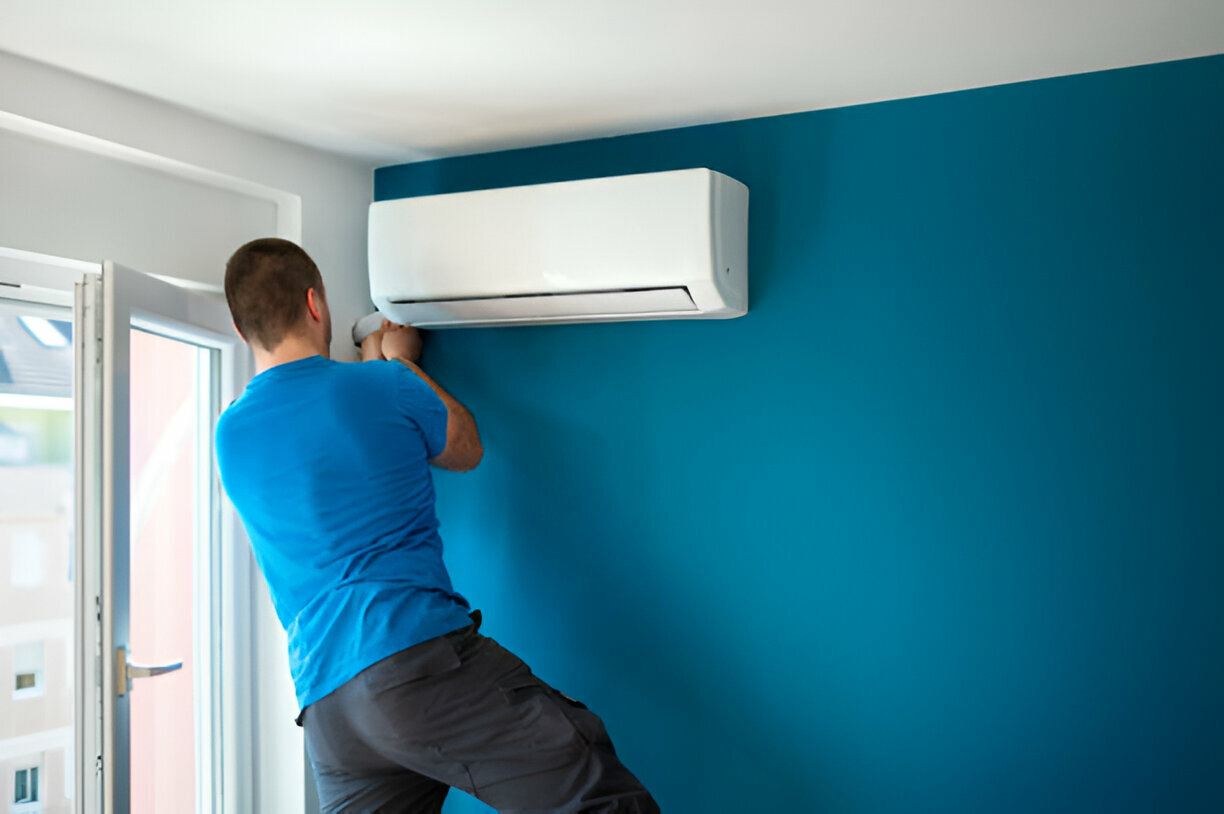
Installing a ductless system typically requires far less disruption than adding or replacing central ductwork. A small refrigerant line and condensate drain run through a modest opening in the wall, connecting the indoor unit to the outdoor compressor. No major construction or ceiling removal is usually needed.
This makes ductless units well suited for older homes that lack existing ducts, for room additions, or for spaces such as garages and sunrooms that were never connected to the main system. Installation times are often shorter, and the process generates less dust and debris than extensive duct renovations.
Quieter Everyday Operation
Indoor ductless units are engineered for low sound levels. Many operate at volumes comparable to a quiet conversation or even softer, which is noticeably different from the whoosh of air through ducts or the loud cycling of some window units. The outdoor compressor is also designed to run more quietly than older central systems.
This reduced noise contributes to a more peaceful indoor environment, particularly in bedrooms, home offices, and living areas where background sound can become distracting. Consistent low-volume performance is one of the features owners frequently appreciate after making the switch.
Improved Indoor Air Quality Potential
Because ductless systems do not rely on a network of ducts, they avoid the dust, allergens, and debris that can accumulate inside traditional ductwork over years of use. Each indoor unit contains its own washable filters that capture particles before air is circulated back into the room.
Regular filter cleaning is straightforward and helps maintain better air quality in the conditioned spaces. While no system eliminates the need for general house cleaning, the absence of duct-related contaminants can make a measurable difference for households concerned about dust or seasonal allergens.
Flexible Placement Options
Indoor units can be mounted high on a wall, placed near the ceiling, or installed as floor-console or cassette styles depending on the room layout and aesthetic preferences. This flexibility allows the system to fit rooms of different sizes and configurations without dominating the visual space.
Outdoor units are relatively compact and can be positioned on a pad, wall bracket, or other suitable location with proper clearance. The overall design adapts more readily to architectural constraints than large central systems that require dedicated mechanical rooms or extensive attic access.
Year-Round Heating and Cooling Capability
Many ductless systems function as heat pumps, providing both cooling in summer and efficient heating in cooler months. In mild to moderate climates, they can serve as the primary heating source for the rooms they cover. Even in colder regions, they often handle a substantial portion of the heating load when paired with existing systems.
This dual capability reduces the need for separate window air conditioners in summer and portable heaters in winter. The same equipment delivers comfort across seasons, simplifying maintenance and operation.
A Closer Look at the Core Advantages
Switching to a ductless system commonly delivers the following practical benefits:
- Lower energy consumption through the elimination of duct losses and inverter technology
- Independent temperature control for individual rooms or zones
- Faster and less invasive installation than traditional ducted systems
- Noticeably quieter indoor and outdoor operation
- Reduced accumulation of dust and allergens associated with ductwork
- Multiple mounting styles that adapt to different room layouts
- Combined heating and cooling performance in a single system
- Suitability for homes without existing ducts or for targeted room additions
- Potential for lower long-term operating costs when properly sized
- Compatibility with modern controls that allow scheduling and remote adjustment
These points reflect the experiences of many households that have moved away from conventional central air in favor of more targeted solutions.
Better Suitability for Renovations and Additions
When homeowners finish a basement, convert an attic, or add a new wing, extending existing ductwork can be costly and complicated. Ductless units provide an efficient way to condition the new space without altering the main system. The same approach works well for older houses where installing ducts would require significant structural changes.
This adaptability makes ductless technology a frequent choice for remodeling projects where preserving original architecture matters and where adding large ducts would be impractical.
Conclusion
Ductless air conditioning systems address several long-standing limitations of traditional central air. By delivering conditioned air directly to individual rooms, they improve efficiency, allow precise temperature control, and reduce installation complexity. Quieter operation, flexible placement, dual heating and cooling capability, and the potential for better air quality add further practical value. For homeowners dealing with uneven comfort, high energy use, or spaces that lack ductwork, these systems offer a clear alternative. Evaluating the specific needs of each room and selecting properly sized equipment remains the most reliable path to realizing the full set of benefits.
Apart from that, if you want to know about Smart HVAC Energy-Saving Tips to Keep Your Home Comfortable then visit our Home improvement category.